

Many parents believe herbal remedies are either miracle cures or complete myths, but the truth lies somewhere in between. Research shows chamomile demonstrates measurable benefits for mood and sleep in some clinical trials, while other studies show no remarkable results. This inconsistency doesn't mean herbs lack value, it means parents need accurate information to use them safely and effectively. Understanding which herbs offer genuine support for common family health challenges, and how to integrate them responsibly into your routine, empowers you to make informed decisions about natural wellness options that complement traditional healthcare.
Table of Contents
- Understanding Herbal Wellness: Benefits And Safety Considerations
- Top Herbal Remedies For Common Parenting Health Challenges
- Integrating Herbal Wellness Into Your Family's Daily Routine
- Explore Herbal Wellness Products Designed For Parents
- What Are The Safest Herbs For Children In Families?
- How Do I Know The Right Dosage Of Herbal Teas Like Chamomile For My Family?
- Can Herbal Wellness Replace Conventional Medicine For Family Health?
Key takeaways
| Point | Details |
|---|---|
| Evidence-based benefits | Clinical research supports chamomile for mood, anxiety, and sleep disorders, though results vary across studies. |
| Safety first approach | Always consult healthcare professionals before introducing herbal remedies, especially for children. |
| Quality matters | Source herbs from trusted suppliers and follow recommended dosages to ensure safety and effectiveness. |
| Complementary role | Herbal wellness supports overall health but should never replace medical treatment for serious conditions. |
| Personalized tracking | Keep a wellness journal to monitor family reactions and adjust herbal intake based on individual responses. |
Understanding herbal wellness: benefits and safety considerations
Herbal wellness appeals to parents seeking natural alternatives for common health concerns like sleep disruptions, digestive issues, and immune support. Unlike pharmaceutical medications, herbs typically work gently with the body's systems, offering a softer approach that many families find attractive. However, natural doesn't automatically mean safe or effective for everyone.
Chamomile stands out as one of the most researched herbs for mental wellness. Clinical trials showed significant improvements in depression, anxiety, stress, and sleep disorders with chamomile, while others showed no remarkable results. This variability highlights an important reality: herbal effects depend on factors like individual body chemistry, preparation methods, dosage amounts, and treatment duration. What works beautifully for one family member might produce minimal results for another.
The research landscape reveals another challenge. Scientists still haven't established definitive dosage guidelines for most herbs, including chamomile. Without standardized recommendations, parents must navigate uncertainty when determining how much to use and for how long. This makes professional guidance essential rather than optional.
Before incorporating any herbal remedy into your family's routine, consult with healthcare professionals who understand both conventional medicine and herbal applications. Pediatricians can advise on age-appropriate herbs and dosages for children. Herbalists bring specialized knowledge about preparation methods and potential interactions. Together, these experts help you avoid common pitfalls.
Key safety considerations include:
- Always verify herbs won't interact with current medications or health conditions
- Start with the smallest effective dose and increase gradually if needed
- Purchase from reputable suppliers who test for contaminants and verify ingredient purity
- Watch for allergic reactions, especially during first-time use
- Stop immediately if adverse effects occur and seek medical advice
Pro Tip: Create a simple spreadsheet tracking which family member takes which herb, at what dose, and any observed effects. This documentation becomes invaluable during healthcare consultations and helps identify patterns over time.
"The goal isn't to replace modern medicine but to thoughtfully integrate herbal remedies and natural detoxes that support your family's wellness journey alongside professional medical care."
Understanding these foundations prepares you to explore specific herbs that address common parenting health challenges with confidence and realistic expectations.
Top herbal remedies for common parenting health challenges
Certain herbs have earned their reputation through both traditional use and modern research, making them practical starting points for family wellness. Each offers distinct benefits while requiring specific safety awareness.
Chamomile tops the list for supporting relaxation and sleep quality. Parents often use it as a gentle evening tea to help children wind down before bedtime. Beyond sleep, chamomile shows promise for digestive comfort and mild anxiety relief. However, more trials are suggested to determine an optimal and safe dosage as well as duration for using chamomile, which means you'll need to work closely with healthcare providers to find appropriate amounts.
Ginger excels at addressing nausea and digestive upset, making it valuable during stomach bugs or motion sickness. Fresh ginger tea or small amounts of ginger in food can settle queasy stomachs naturally. It also supports healthy inflammation responses throughout the body.

Elderberry has gained attention for immune support during cold and flu season. Many families use elderberry syrup at the first sign of illness. Research suggests it may reduce symptom duration and severity, though quality varies significantly between products.
Echinacea traditionally supports immune function, particularly for upper respiratory health. Some parents give it preventively during high-exposure periods like back-to-school season.
| Herb | Primary Benefits | Recommended Uses | Safety Notes |
|---|---|---|---|
| Chamomile | Sleep support, anxiety relief, digestive comfort | Evening tea, daily for ongoing stress | Generally safe; rare allergies possible |
| Ginger | Nausea relief, digestive health, inflammation support | Fresh tea, cooking, small frequent doses | Avoid high doses with blood thinners |
| Elderberry | Immune support, cold/flu symptom reduction | Syrup at illness onset, preventive use | Must be cooked; raw berries are toxic |
| Echinacea | Immune function, respiratory health | Short-term during illness exposure | Not for autoimmune conditions |
Selecting quality herbal products requires attention to several factors. Look for organic certification to minimize pesticide exposure. Third-party testing verifies that products contain what labels claim and remain free from heavy metals or contaminants. Reputable suppliers provide clear sourcing information and preparation instructions.
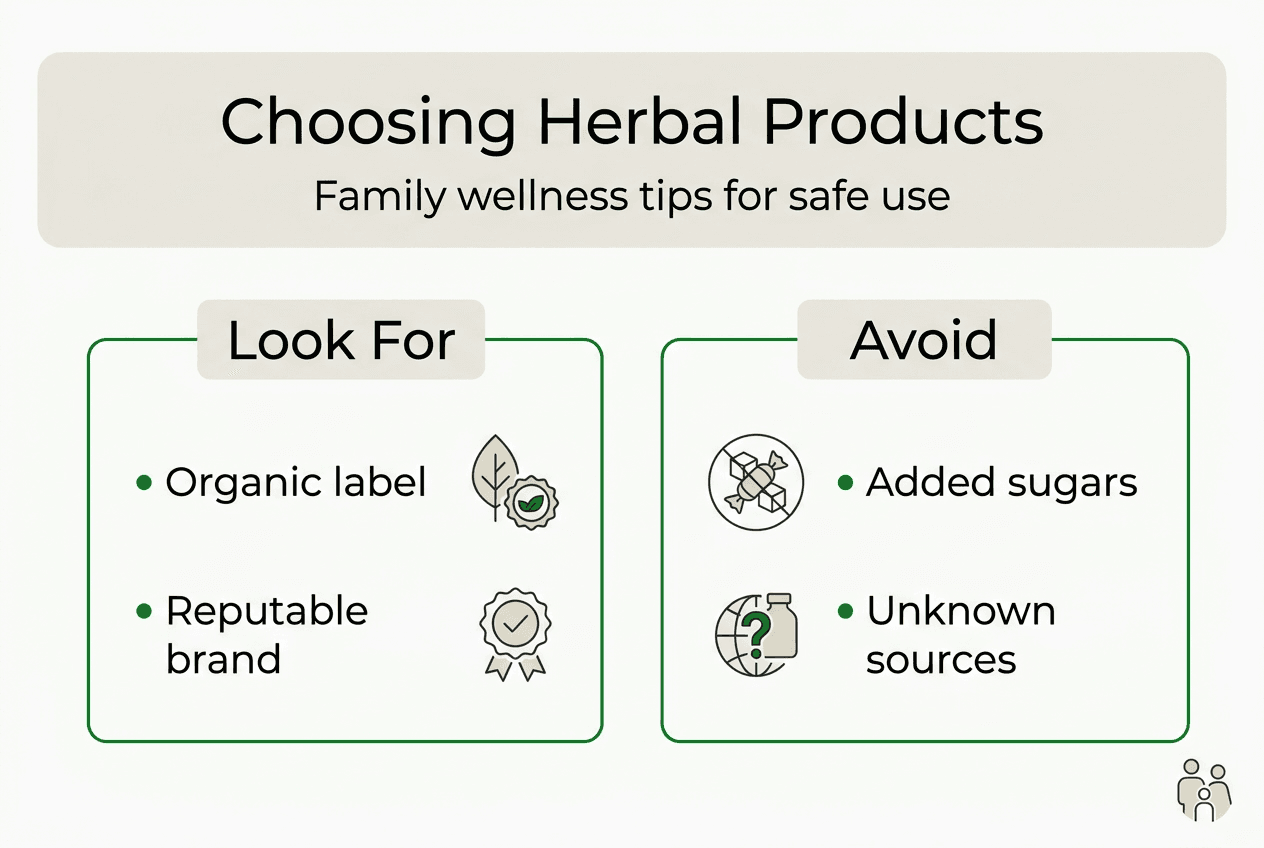
Potential medication interactions deserve serious consideration. Herbs contain active compounds that can amplify or interfere with pharmaceutical effects. For example, chamomile may increase bleeding risk when combined with blood thinners. Ginger can affect blood sugar medications. Always disclose all herbs and supplements to your healthcare team.
Pro Tip: Before giving any herb to children, discuss it with their pediatrician. Children's developing systems process substances differently than adults, and professional guidance ensures age-appropriate choices and dosages.
Exploring options like an herbal immune booster or herbal digestion support tea from trusted sources gives you convenient, tested formulations designed specifically for family wellness needs.
Integrating herbal wellness into your family's daily routine
Successfully incorporating herbs into family life requires a thoughtful, gradual approach that respects individual differences and maintains safety as the top priority. Follow these steps to build a sustainable herbal wellness routine:
-
Start with one herb at a time. Introducing multiple herbs simultaneously makes it impossible to identify which one causes any effects, positive or negative. Choose a single herb addressing your most pressing concern and use it consistently for at least two weeks before adding another.
-
Establish consistent timing. Herbs work best when taken regularly at the same time each day. Morning herbs might support energy and digestion, while evening options like chamomile promote relaxation and sleep. Consistency helps you accurately assess effectiveness.
-
Monitor and document responses. Pay attention to changes in sleep quality, mood, energy levels, and physical symptoms. Note any side effects, even minor ones. This information guides adjustments and provides valuable data for healthcare consultations.
-
Adjust dosages carefully. If you see no results after two weeks at the starting dose, consult your healthcare provider about increasing gradually. Never exceed recommended maximums, and remember that more trials are suggested to determine an optimal and safe dosage as well as the duration for using chamomile and many other herbs.
-
Combine herbs wisely. Once you've established tolerance to individual herbs, you might consider combinations. However, herb interactions can be complex. Some enhance each other's effects while others interfere. Research each combination or consult an herbalist before mixing.
-
Source from trusted suppliers. Quality varies dramatically in the herbal market. Reliable suppliers provide transparency about sourcing, testing, and preparation methods. They use proper storage to maintain potency and prevent contamination.
-
Schedule regular reviews. Every three months, evaluate whether each herb continues serving its purpose. Bodies change, and what worked initially might need adjustment. Periodic breaks can also prevent tolerance buildup.
Pro Tip: Keep a wellness journal specifically for herbal use. Record the herb name, dose, time taken, and any observations about effects or side effects. Include notes about sleep quality, mood, energy, and physical symptoms. Over time, patterns emerge that help you optimize your family's herbal routine.
Children require extra caution and individualized approaches. Their smaller body sizes mean adult doses are inappropriate and potentially dangerous. Taste preferences matter too, since consistency depends on willingness to take herbs regularly. Many parents find success with herbal teas sweetened with honey (for children over one year) or herbal syrups designed for pediatric use.
Creating rituals around herbal wellness helps build lasting habits. A calming chamomile tea ceremony before bed signals the body it's time to wind down. Morning ginger tea with breakfast becomes a pleasant digestive support routine. These small rituals transform herbal wellness from a chore into an enjoyable family practice.
Consider exploring a plant-based multivitamin supplement to complement your herbal routine, ensuring comprehensive nutritional support alongside targeted herbal benefits.
Explore herbal wellness products designed for parents
Building a family herbal wellness routine becomes simpler when you have access to carefully formulated products created specifically for common parenting health challenges. Finer Holistics offers thoughtfully crafted herbal solutions that align with the safety-first, evidence-informed approach discussed throughout this article.

For digestive support, Finer Digest tea combines herbs traditionally used to promote gut health and comfort. When your family faces occasional digestive upset or you want to support healthy digestion as part of daily wellness, this blend provides a gentle, natural option.
During cold and flu season, or whenever immune support becomes a priority, the Finer Immune booster offers a comprehensive formula designed to strengthen your family's natural defenses. It's the kind of proactive support that helps parents feel confident about their wellness choices.
Explore the complete selection of natural herbal remedies to discover options that match your family's specific needs and wellness goals, all backed by quality sourcing and expert herbal knowledge.
What are the safest herbs for children in families?
Chamomile, ginger, and elderberry are generally considered safe for children when used appropriately, but you should always consult a pediatrician before introducing any herbal remedy to your child's routine. Age, weight, existing health conditions, and current medications all influence safety and appropriate dosing. Avoid herbs with potent active compounds or those traditionally used for adult-specific conditions without expert guidance. Start with very small amounts and watch carefully for any adverse reactions during initial use.
How do I know the right dosage of herbal teas like chamomile for my family?
Starting with the smallest recommended amount is the safest approach, especially for children and first-time users. Follow manufacturer guidelines when available, but recognize that more trials are suggested to determine an optimal and safe dosage as well as the duration for using chamomile and similar herbs. Consult healthcare professionals for personalized advice based on age, weight, health status, and specific wellness goals. Keep detailed records of what you use and any effects observed, then adjust gradually under professional guidance. Visit resources on herbal dosage guidelines for additional support in making informed decisions.
Can herbal wellness replace conventional medicine for family health?
Herbal remedies support wellness and may help manage minor health concerns, but they are not replacements for medical treatment, especially for serious or chronic conditions. Always communicate with healthcare providers before making changes to treatment plans or introducing herbs alongside medications. The most effective approach integrates herbal wellness with conventional medical care, allowing you to benefit from both natural support and evidence-based medicine. Think of herbs as complementary tools that enhance overall wellness rather than substitutes for professional medical diagnosis and treatment.
Recommended
- Finer Holistics | Herbal Remedies & Natural Detoxes – Finer Holistics Co.
- Finer Minerals™ | Sea Moss, Bladderwrack & Burdock Root for Energy & Immunity – Finer Holistics Co.
- Finer Immune™ | Herbal Immune Booster for Cold & Flu Prevention & Recovery – Finer Holistics Co.
- Candida Purge™ | Herbal Candida Cleanse, Yeast and Fungal Detox & Gut Health Support – Finer Holistics Co.
- Boost your family's immunity naturally: proven strategies | Paynless
- Best natural remedies for dandruff 2026: microbiome safe – Victory Serums