
Most people think detox means a juice cleanse or a week of lemon water. The truth is your body runs its own sophisticated detox operation 24 hours a day, and your liver and kidneys are doing the heavy lifting. Detox is primarily managed by your own organs, not trendy diets. What you eat, though, can either support or slow down that process. Antioxidants from herbs and whole foods are one of the most evidence-backed tools you have for keeping that internal system running clean. This guide breaks down exactly how they work, what the research actually shows, and how to use them wisely.
Table of Contents
- How detox works in your body
- Antioxidants: Your cell's defense team
- Evidence: Do antioxidants boost real detox markers?
- Herbal whole foods vs supplements: What's best for detox?
- How to incorporate antioxidants for detox: Everyday habits
- Support your detox journey with trusted herbal remedies
- Frequently asked questions
Key Takeaways
| Point | Details |
|---|---|
| Antioxidants support detox | Herbal antioxidants protect your liver and cells but don't directly eliminate toxins. |
| Whole foods outperform supplements | Clinical evidence favors antioxidant-rich herbs and foods over high-dose supplements for safety and effectiveness. |
| Best herbal remedies | Berries, citrus, turmeric, milk thistle, and dandelion offer the strongest researched benefits for supporting natural detox. |
| Results take time | Consistent use of herbal antioxidants can improve liver and oxidative stress markers in 3 to 12 weeks. |
How detox works in your body
Biological detoxification is not a trend. It is a continuous, multi-step process your body runs automatically. Your liver handles the bulk of it through two main phases. Phase I breaks down toxins into smaller compounds using enzymes. Phase II then binds those compounds to molecules that make them water-soluble so your kidneys can flush them out through urine. Both phases generate reactive molecules called free radicals as a byproduct.
This is where things get interesting. The very act of processing toxins creates oxidative stress inside your cells. Think of it like burning fuel in an engine: the combustion is necessary, but the exhaust needs to be managed. Without enough antioxidants on hand, that oxidative exhaust builds up and starts damaging your cells, proteins, and DNA.
"Most detox diets lack scientific backing. Liver and kidney function is what actually handles toxin processing in the body."
Here is what real detox support looks like, compared to what it does not:
- Supports real detox: Eating antioxidant-rich herbs and whole foods, staying hydrated, sleeping 7 to 9 hours, reducing alcohol and processed food intake
- Does not support real detox: Juice cleanses with no fiber, extreme fasting, commercial "detox teas" with laxatives, cutting entire food groups
- Neutral at best: Most over-the-counter detox kits with no clinical evidence
Supporting natural liver detoxification means giving your liver the raw materials it needs to complete both phases efficiently. Antioxidants are a core part of that supply chain.
Antioxidants: Your cell's defense team
Antioxidants are molecules that neutralize free radicals before they cause damage. Free radicals are unstable atoms that steal electrons from nearby molecules, triggering a chain reaction of cellular damage called oxidative stress. Left unchecked, oxidative stress is linked to accelerated aging, inflammation, and impaired organ function.

During detox, your liver generates a significant load of reactive oxygen and nitrogen species. Antioxidants neutralize these reactive species to prevent damage to DNA, proteins, and cell membranes during the detoxification process. Without that protection, your liver's own cleanup work can become a source of cellular harm.
Here is how antioxidants protect you during detox, step by step:
- Scavenging free radicals directly in the bloodstream and liver tissue
- Regenerating other antioxidants like glutathione, which is your liver's primary internal defense molecule
- Reducing inflammation triggered by oxidative damage in liver and kidney cells
- Supporting enzyme activity in Phase II detox pathways that require antioxidant cofactors
The best part? You do not need a supplement bottle to get these benefits. Why whole foods matter in detox comes down to the fact that plants deliver antioxidants in complex, bioavailable combinations that your body recognizes and uses efficiently.
Pro Tip: Pair turmeric with black pepper in your meals. Piperine in black pepper increases curcumin absorption by up to 2,000%, making your turmeric far more effective as an antioxidant source.
Key stat: Glutathione, your liver's master antioxidant, drops significantly under chronic oxidative stress. Herbal antioxidants from food sources help preserve and regenerate it naturally.
Evidence: Do antioxidants boost real detox markers?
This is where the science gets compelling. Multiple clinical trials have measured what happens to actual detox biomarkers when people consume herbal antioxidants consistently. The results are not just theoretical.
Herbal antioxidants including ellagic acid, silymarin, turmeric, and dandelion reduced liver enzymes, lowered oxidative stress markers, and improved detox biomarkers in clinical studies. Elevated liver enzymes like ALT and AST are standard indicators of liver stress. When those numbers drop, it means the liver is under less strain.
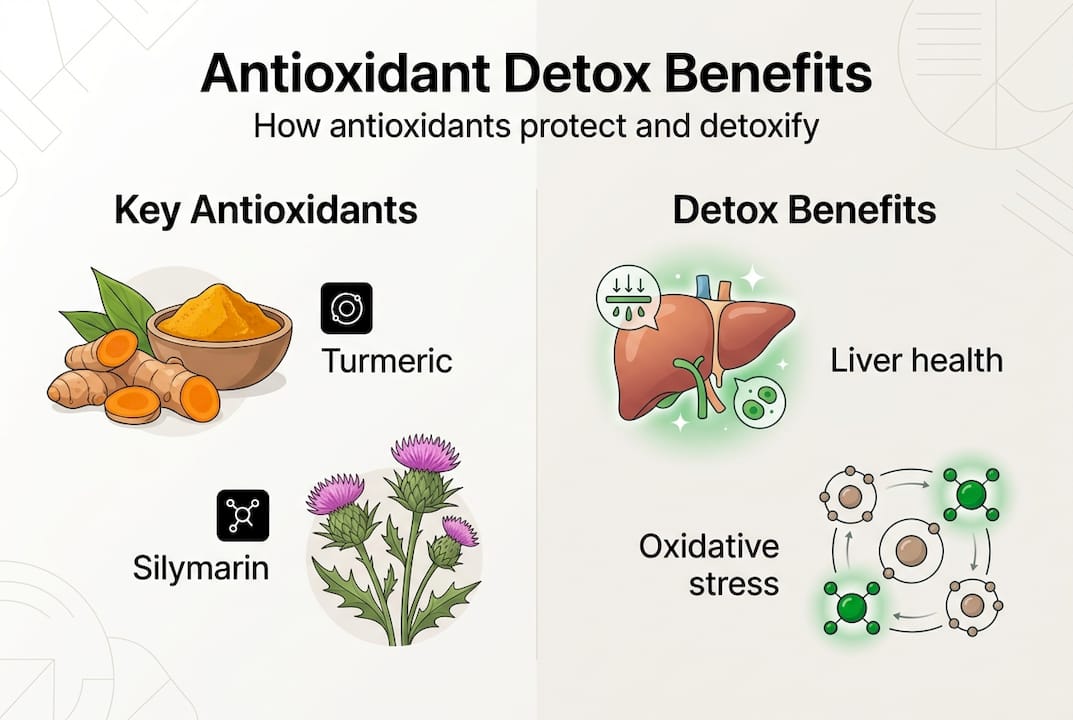
A separate randomized controlled trial found that plant-based nutraceuticals over 36 weeks improved liver enzyme levels in healthy adults compared to placebo. That is not a short-term flush effect. That is sustained, measurable organ support.
| Herbal antioxidant | Detox marker improved | Approximate change |
|---|---|---|
| Silymarin (milk thistle) | ALT and AST liver enzymes | 10 to 20% reduction |
| Curcumin (turmeric) | Reactive oxygen species (ROS) | Up to 9% reduction |
| Ellagic acid (pomegranate, berries) | Oxidative stress biomarkers | Significant improvement |
| Dandelion root | Liver enzyme levels | Measurable reduction |
"The herbal clinical evidence consistently points to whole-food herb sources outperforming isolated synthetic antioxidants for detox biomarker improvement."
For a broader look at how these fit into a complete wellness plan, the herbal strategies overview covers how to layer these herbs effectively. The pattern across studies is clear: consistent, moderate intake of whole-herb antioxidants produces real, measurable improvements in the markers your doctor actually checks.
Herbal whole foods vs supplements: What's best for detox?
Walk into any health store and you will find shelves of antioxidant supplements promising dramatic results. The research tells a more nuanced story. High-dose antioxidant supplements can act as pro-oxidants or even increase disease risk, while whole foods consistently show safer and more sustainable outcomes.
The problem with mega-dose supplements is context. Your body uses antioxidants in a tightly regulated system. Flooding that system with isolated, high-concentration compounds can actually tip the balance in the wrong direction. In certain health conditions, mega-doses may promote disease progression rather than prevent it, particularly in high oxidative stress states.
| Factor | Whole-herb foods | High-dose supplements |
|---|---|---|
| Safety profile | High, well-tolerated | Variable, risk of pro-oxidant effect |
| Bioavailability | Naturally optimized | Often poorly absorbed in isolation |
| Clinical evidence | Strong for detox markers | Mixed, some negative outcomes |
| Cost | Low to moderate | Moderate to high |
| Synergistic compounds | Present naturally | Usually absent |
Whole herbs work because they deliver antioxidants alongside fiber, enzymes, and co-factors that improve absorption and regulate dosage naturally. Your body gets what it needs without the risk of overshooting. Focusing on natural whole foods as your primary antioxidant source is the approach most supported by current evidence.
Pro Tip: If you are considering a supplement, look for standardized herbal extracts at moderate doses rather than isolated antioxidant compounds. Milk thistle standardized to 70 to 80% silymarin is a good example of a well-researched option. Always check with your healthcare provider first, especially if you take medications.
For a step-by-step approach to building a safe routine, safe detox steps outlines how to start without overwhelming your system.
How to incorporate antioxidants for detox: Everyday habits
Knowing the science is one thing. Putting it into your daily life is where the real change happens. The good news is that building an antioxidant-rich detox routine does not require an overhaul of your entire lifestyle.
Dietary antioxidants from herbs like berries, turmeric, milk thistle, and citrus are recommended for safe, effective detox support. These are foods and herbs you can add to meals you are already eating.
Here are five practical daily steps to build your antioxidant detox routine:
- Start your morning with herbal tea. Dandelion root or milk thistle tea gives your liver antioxidant support before the day's metabolic load begins.
- Add berries to breakfast. Blueberries, raspberries, and pomegranate seeds are dense in ellagic acid and anthocyanins, two of the most studied antioxidants for liver protection.
- Use turmeric in cooking daily. Add it to soups, rice, or scrambled eggs. Pair with black pepper every time.
- Drink at least 8 glasses of water. Your kidneys need adequate hydration to flush the water-soluble compounds your liver prepares during Phase II detox.
- Reduce processed food and alcohol. Both increase the oxidative load your liver must manage, depleting your antioxidant reserves faster.
Beyond food, your lifestyle habits directly affect how well your antioxidant system functions:
- Sleep 7 to 9 hours nightly. Your liver's peak detox activity happens during deep sleep.
- Exercise moderately, 3 to 5 times per week. Movement boosts your body's own antioxidant enzyme production.
- Manage stress actively. Chronic stress elevates cortisol, which increases oxidative stress and depletes glutathione.
- Eat cruciferous vegetables regularly. Broccoli, kale, and Brussels sprouts activate Phase II detox enzymes directly.
For a complete framework, the holistic herbal checklist walks you through how to layer these habits into a sustainable weekly routine. Small, consistent actions compound into real results over weeks and months.
Support your detox journey with trusted herbal remedies
Building an antioxidant-rich detox routine is most effective when your herbal sources are high quality and thoughtfully formulated. At Finer Holistics, every product is crafted by a holistic herbalist with exactly this kind of evidence-backed, whole-herb approach in mind.
Our herbal detox remedies are designed to align with what the research actually supports: whole-herb antioxidant sources, not isolated mega-dose compounds. If you want targeted liver support, our herbal liver detox combines herbs like milk thistle and dandelion that have direct clinical backing for improving liver enzyme markers. For digestive support that works alongside your detox routine, our herbal digestion support helps your gut process and eliminate what your liver prepares. These are not quick fixes. They are tools built to support your body's own systems, consistently and safely.
Frequently asked questions
Can antioxidants completely remove toxins from my body?
Antioxidants help protect cells and support your liver during detox but do not directly remove toxins themselves. Toxin removal is managed by your liver and kidneys, while antioxidants reduce the oxidative stress that builds up during that process.
Which herbal antioxidants are most proven for detox support?
Berries, citrus fruits, turmeric, milk thistle, and dandelion have the strongest research backing for detox-related antioxidant benefits. These herbs improved detox biomarkers including liver enzymes and oxidative stress markers in clinical trials.
Are high-dose antioxidant supplements safe for daily detox?
High-dose antioxidant supplements may be harmful and are not safer or more effective than whole-food sources. Supplements can act as pro-oxidants at high doses, making whole herbs the preferred and safer option.
How quickly can I notice benefits from antioxidant-rich detox foods?
Clinical studies typically see improvements in liver markers and oxidative stress within 3 to 12 weeks of regular herbal intake. Herbal nutraceutical use improved enzymes over 8 to 36 weeks of consistent use in randomized trials.