

TL;DR:
- Detox teas mainly offer mild diuretic, digestive, and antioxidant effects, not true detoxification.
- Scientific evidence shows the body's organs naturally detoxify without herbal products, making most claims exaggerated.
- Certain ingredients like senna pose risks of dependence and health complications; use caution or avoid daily consumption.
Every wellness aisle and social feed is packed with detox teas promising to flush toxins, melt fat, and reset your body overnight. The problem? The science behind most of these claims is thin at best. If you've ever stood in a store wondering whether that pretty box of herbs is actually going to do something for your health, you're not alone. This article cuts through the noise so you can make a genuinely informed choice. We'll break down how detox teas claim to work, what the research actually supports, which ingredients are worth knowing, and when these teas could cause more harm than good.
Table of Contents
- How do detox teas claim to work?
- Ingredient spotlight: What's really in detox teas?
- What benefits can you expect—and what's overhyped?
- Risks, warnings, and who should avoid detox teas
- Why most people are focusing on the wrong 'detox'
- Explore safe, effective herbal detox solutions with Finer Holistics
- Frequently asked questions
Key Takeaways
| Point | Details |
|---|---|
| Detox teas aren’t detoxifying | Your body already handles detoxification, so teas don’t add extra cleansing power. |
| Mild digestive benefits only | Most benefits come from short-term digestive relief, hydration, or minor antioxidant effects. |
| Ingredients matter most | Understanding herbal ingredients helps you choose safer, more effective teas for your needs. |
| Beware of overuse and risks | Frequent or high-dose use can cause digestive problems, dehydration, or dependency. |
| Lifestyle trumps quick fixes | Real wellness comes from diet, hydration, and movement, not teas alone. |
How do detox teas claim to work?
Most detox teas are marketed around one big idea: your body is full of harmful toxins, and drinking the right blend of herbs will flush them out. Brands promise everything from weight loss and clearer skin to better digestion and renewed energy. These are bold claims. Before you buy in, it helps to understand what's actually happening inside your body every single day.
Your liver, kidneys, lymphatic system, and digestive tract are already working around the clock to filter waste, neutralize harmful compounds, and eliminate what your body doesn't need. This is a sophisticated, continuous process that doesn't need a tea to kick it into gear. As WebMD notes, detox teas do not enhance the body's natural detoxification processes, as the liver, kidneys, and other organs handle toxin removal efficiently without additional aid.
So what are detox teas actually doing? Most of their effects come down to the specific herbs they contain. Common ingredients include:
- Dandelion root: Acts as a mild diuretic, increasing urine output
- Green tea: Provides antioxidants and a gentle caffeine boost
- Ginger: Soothes the digestive tract and reduces nausea
- Peppermint: Relaxes intestinal muscles and eases bloating
- Senna: A powerful laxative that speeds up bowel movements
These herbs do have real effects on the body. But those effects are mostly digestive or diuretic in nature, not systemic detoxification. The word "detox" on the label is largely a marketing term, not a medical one. A liver specialist puts it plainly: the liver is so efficient at its job that no tea, juice, or supplement can meaningfully improve on it.
"The concept of 'detoxing' through teas or cleanses is not supported by medical science. Your body's detox organs are already doing the work."
If you're curious about what genuine, safe natural detox steps look like, the answer is less about products and more about consistent daily habits.
Ingredient spotlight: What's really in detox teas?
Knowing which herbs are in your cup and what they actually do gives you real power as a consumer. Here's a breakdown of the most common detox tea ingredients and what the research says about each one.
| Ingredient | Claimed effect | What research supports |
|---|---|---|
| Dandelion root | Liver support, detox | Mild diuretic; limited liver evidence |
| Green tea | Fat burning, antioxidants | Antioxidant activity; modest metabolism effect |
| Ginger | Digestion, inflammation | Reduces nausea; eases digestive discomfort |
| Peppermint | Bloating, gut health | Relaxes GI muscles; reduces bloating |
| Senna | Cleansing, weight loss | Strong laxative; no detox benefit |
According to research on common detox ingredients, dandelion root supports the liver mildly and acts as a diuretic, green tea delivers antioxidants with a small metabolism boost, ginger and peppermint aid digestion and reduce bloating, and senna acts purely as a laxative. That last one is important. Senna is not a gentle herb. It's a pharmaceutical-grade laxative that happens to grow in nature, and it's included in many detox teas to create the sensation of "cleansing."
Here's what each featured herb realistically offers:
- Dandelion root: Supports mild fluid reduction; may offer minor liver-protective compounds
- Green tea: Rich in catechins, which are plant-based antioxidants that fight oxidative stress
- Ginger: One of the most well-researched herbs for nausea, bloating, and general digestive comfort
- Peppermint: Particularly helpful for people with irritable bowel symptoms or post-meal bloating
- Senna: Produces rapid bowel movements; not suitable for regular use
If you want to go deeper on what makes a quality herbal formula, exploring herbal detox ingredients and understanding sourcing and dosage matters more than the label claim. For those specifically interested in gut health, digestive herbal remedies offer a more targeted and sustainable approach than a broad detox blend.
What benefits can you expect—and what's overhyped?
Let's get honest about what drinking detox tea will and won't do for you. This matters because expectations shape experience, and unrealistic expectations lead to wasted money and frustration.
| What's realistic | What's overhyped |
|---|---|
| Mild bloating relief | Rapid weight loss |
| Improved hydration (from drinking more liquid) | Toxin removal |
| Digestive comfort from ginger or peppermint | Skin clearing from "detox" |
| Antioxidant support from green tea | Organ cleansing |
| Gentle diuretic effect | Long-term fat loss |
The realistic benefits of detox teas include improved hydration, digestive comfort, reduced bloating from laxative or diuretic effects, and minor antioxidant support from green tea catechins. These are genuinely useful effects for some people. They're just not the dramatic transformation that the packaging implies.

On the weight loss front, green tea research shows small, inconsistent reductions in body weight of around 0.7 to 0.8 kg across meta-analyses, with no clinically significant impact on fat loss or body composition. That's not nothing, but it's also not a weight loss solution.
Here's what you can realistically expect from a well-formulated detox tea:
- Reduced post-meal bloating if the blend includes ginger or peppermint
- A mild increase in bowel regularity if it contains senna or cascara
- Slightly increased fluid intake if you replace sugary drinks with tea
- A calming, ritualistic benefit from the act of brewing and drinking tea
- Minor antioxidant support from green tea or hibiscus
What you should not expect: fat loss, toxin removal, organ cleansing, or any kind of medical-grade result.
Pro Tip: For everyday use, choose teas that are senna-free. Teas built around ginger, peppermint, dandelion, and green tea offer gentle, sustainable support without the risks that come with regular laxative use. For more targeted options, herbal teas for digestion and plant-based detox strategies are worth exploring.
Risks, warnings, and who should avoid detox teas
Detox teas are widely sold as natural and therefore safe. But natural doesn't automatically mean harmless, especially when herbs are used in concentrated forms or combined with other medications.
The documented risks of detox teas include dehydration, electrolyte imbalance, laxative dependency, digestive strain, and rare but serious liver injury from high-dose green tea extracts or other herbs. These aren't just theoretical concerns. Electrolyte imbalances from overuse of diuretic or laxative teas can affect heart rhythm and muscle function. That's a real consequence of something marketed as a gentle cleanse.
Some teas, particularly those with senna, can also create dependency. Your bowel becomes reliant on the laxative to function normally, which is the opposite of what most people are trying to achieve. The colon cleanse safety research from Harvard supports caution here, noting that regular cleansing can disrupt the natural gut microbiome and bowel function.
Who should avoid detox teas entirely:
- Pregnant or breastfeeding women (many herbs are contraindicated)
- People with IBS, Crohn's disease, or other digestive disorders
- Anyone taking prescription medications, especially blood thinners or diuretics
- People with kidney or liver conditions
- Anyone with a history of eating disorders or laxative misuse
- Children and teenagers
Pro Tip: Before trying any detox tea, flip the box over and scan for senna, high-dose green tea extract, and any herbs listed without dosage information. If you can't identify an ingredient or find research on it, that's a reason to pause. Supporting your body with holistic herbal detox strategies that prioritize transparency and safety is always the smarter path.
Why most people are focusing on the wrong 'detox'
Here's the honest truth we've learned from working with herbs and wellness: the detox tea industry has successfully repackaged basic digestive herbs as a shortcut to health transformation. And it works, not because the teas are magic, but because people are genuinely looking for something that makes them feel like they're doing something meaningful for their bodies.
The uncomfortable reality is that colon cleanse research consistently shows no proven detox benefit from teas or cleanses for otherwise healthy individuals. The real detox happens through whole foods, consistent hydration, quality sleep, and movement. These aren't exciting products to sell, but they're what actually moves the needle.
We think the word "detox" deserves to be reclaimed. Instead of a 14-day tea program, think of detox as a daily practice: eating fiber-rich plants, drinking enough water, reducing processed foods, and moving your body. That's where the real results live. A well-chosen herbal tea can absolutely be part of that lifestyle. It just shouldn't be the whole strategy. Explore nutrition-driven detox approaches to see what a full-picture wellness routine actually looks like.
Explore safe, effective herbal detox solutions with Finer Holistics
If you're ready to move beyond the hype and invest in herbal products that are formulated with real ingredients, clear intentions, and honest expectations, we've got you covered.
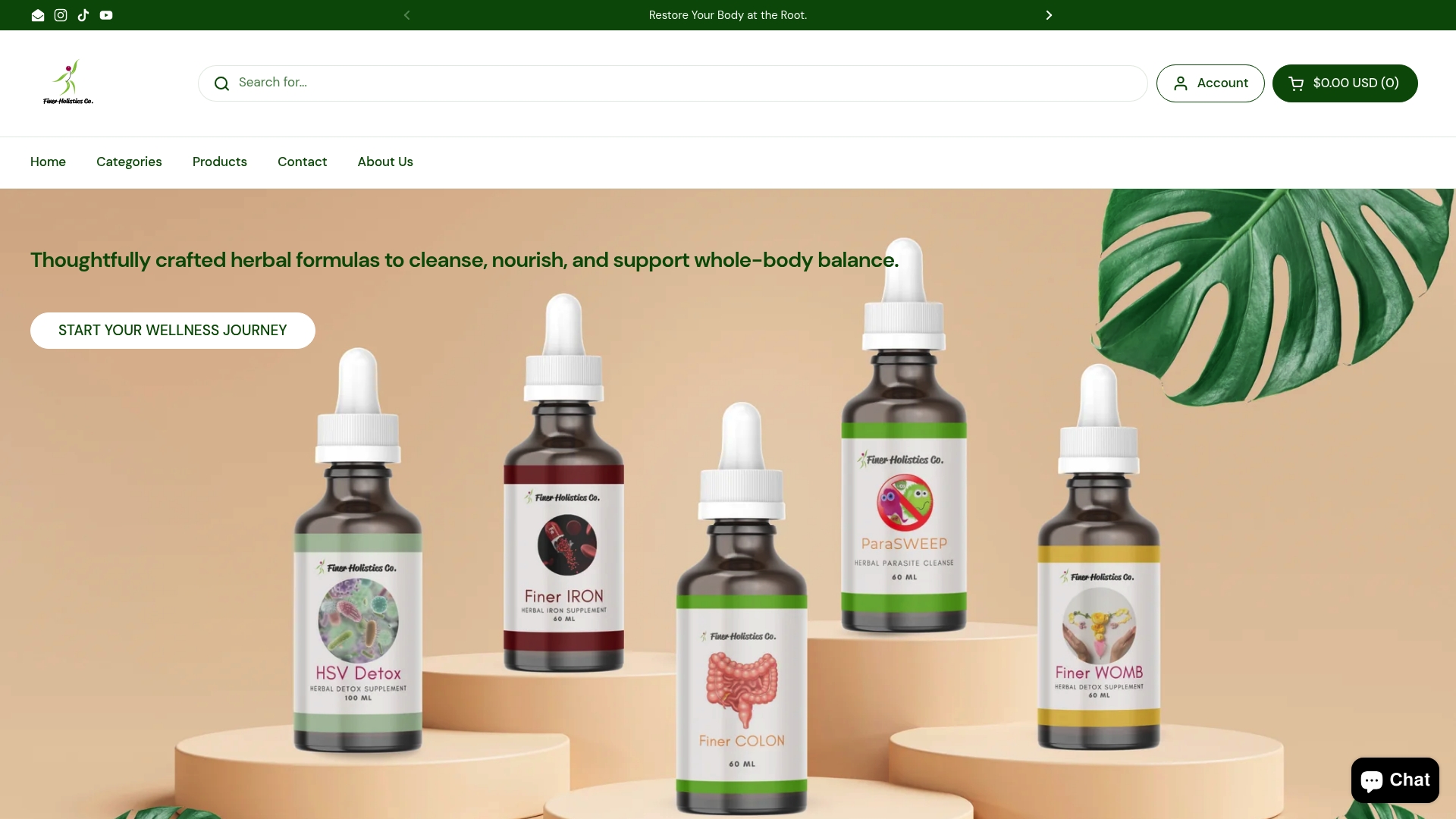
At Finer Holistics, every blend in our herbal detox collection is handcrafted with carefully selected herbs chosen for their traditional wellness benefits and supported by transparent ingredient sourcing. We don't promise overnight miracles. We offer thoughtfully made herbal teas and tinctures designed to support your digestion, hydration, and daily wellness routine in a way that actually makes sense for your body. Browse our collection and find the herbal support that fits your real wellness goals.
Frequently asked questions
Do detox teas actually remove toxins from your body?
No. Your liver and kidneys are already removing toxins efficiently without any assistance from tea, and no herbal blend has been shown to improve on this natural process.
Are there any real benefits to drinking detox teas?
Yes, but they're modest. Mild benefits like improved hydration, digestive comfort, reduced bloating, and minor antioxidant support are realistic outcomes, while dramatic detox or weight loss results are not.
Who should avoid detox teas?
Pregnant or breastfeeding women, people with digestive disorders, and anyone on prescription medications should avoid detox teas, as documented risks include dehydration, electrolyte imbalance, and potential drug interactions.
Is it safe to take detox teas daily?
Daily use is not recommended for most detox teas. Regular use risks include laxative dependency, digestive strain, and dehydration, particularly with teas containing senna or high-dose herbal extracts.
Is senna safe in detox teas?
Senna is a strong laxative and regular use can lead to dependency, digestive discomfort, and dehydration. It's best avoided in teas meant for everyday drinking.