

TL;DR:
- Digestive wellness encompasses gut microbiota balance, nutrient absorption, and minimal discomfort.
- Herbal remedies like ginger and peppermint can support healthy digestion and alleviate symptoms.
- Personalized, gradual approaches are essential due to individual differences and potential sensitivities.
Most people think digestive wellness means not having a stomachache. That framing misses almost everything that matters. Digestive wellness is the state of optimal gastrointestinal function that goes far beyond being symptom-free. Your gut shapes your immune responses, your energy levels, and even how clearly you think on a Tuesday afternoon. When it's running well, you barely notice it. When it's not, everything from your mood to your metabolism pays the price. This guide cuts through the noise and gives you a clear picture of what digestive wellness actually means and how to support it using herbal remedies and plant-based strategies.
Table of Contents
- Defining digestive wellness: More than just digestion
- How digestion works: A journey through your gut
- Holistic approaches: Herbal remedies and plant-based nutrition
- Pitfalls, edge cases, and expert nuances
- What most guides miss about digestive wellness
- Ready to start your digestive wellness journey?
- Frequently asked questions
Key Takeaways
| Point | Details |
|---|---|
| True digestive wellness | It means optimal gut function, microbiota balance, and no chronic digestive symptoms. |
| Holistic solutions work | Herbal remedies and plant-based nutrition can naturally support your digestive health. |
| Personalization is key | Gradually increase plant fibers, monitor your body's response, and adjust for best results. |
| Be aware of pitfalls | A one-size-fits-all approach doesn’t work; tailor strategies to your needs and watch for side effects. |
Defining digestive wellness: More than just digestion
Now that you know digestive wellness is so much more than 'no stomachache,' let's define the term and pinpoint its bigger impact.
True digestive wellness includes three interconnected pillars: efficient nutrient absorption, gut microbiota balance, and the absence of chronic discomfort. Digestive wellness depends on balanced gut microbiota, effective nutrient absorption, and the absence of symptoms like bloating or indigestion. If any one of these pillars wobbles, the others feel it.
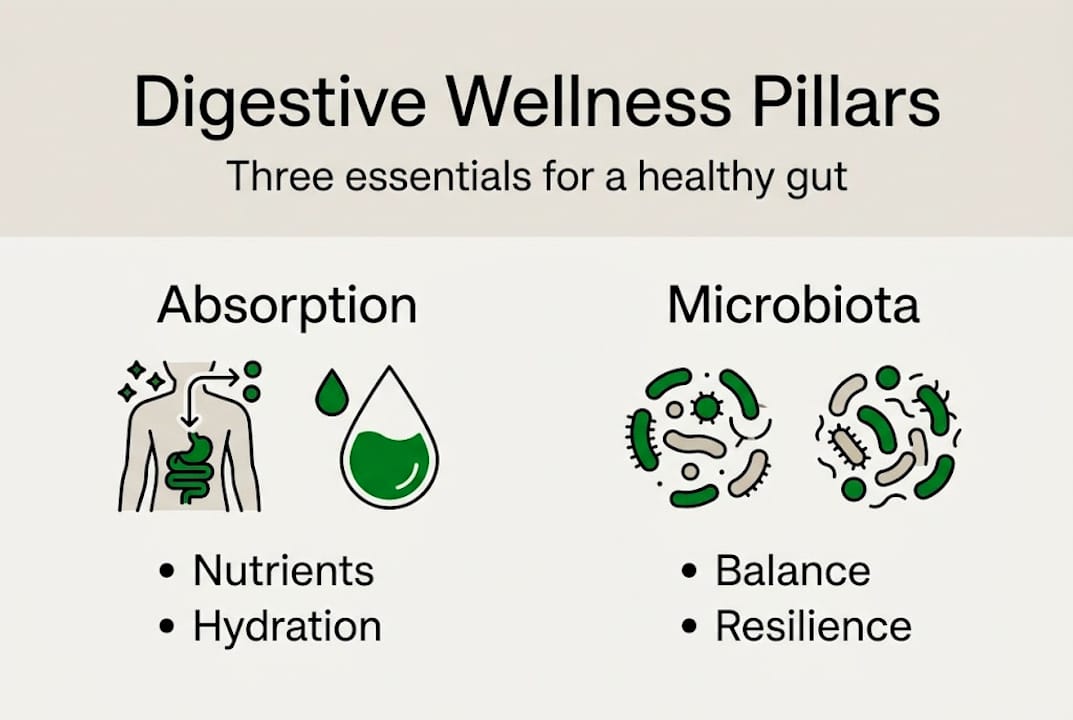
Your gut also operates as a command center for more than digestion. The gut-brain axis is the two-way communication highway connecting your gastrointestinal tract to your central nervous system. This means your gut bacteria influence neurotransmitter production, stress responses, and even your mood. Roughly 70 percent of your immune cells live in the gut lining, making digestive health directly tied to how well your body fights illness.
Common signs your digestive wellness needs attention:
- Persistent bloating or gas after meals
- Irregular bowel movements (too frequent or too infrequent)
- Unexplained fatigue that doesn't improve with sleep
- Frequent indigestion or heartburn
- Skin flare-ups like acne or eczema
- Brain fog or difficulty concentrating
Stat to know: Research suggests that gut microbiota imbalances are linked to conditions ranging from irritable bowel syndrome to anxiety and metabolic disorders, showing just how far the gut's influence reaches.
The good news is that natural herbal support can play a meaningful role in restoring each of these pillars. Small, consistent changes tend to produce lasting improvements, whereas dramatic overhauls often backfire.
How digestion works: A journey through your gut
Having defined digestive wellness, let's explore how your digestive tract actually works, step by step.
Digestion is a precise, multi-stage process. Enzymatic action starts in the mouth, nutrient absorption occurs in the small intestine, waste processing happens in the large intestine, and gut microbiota play essential roles throughout. A breakdown at any stage ripples downstream.
The five key stages of digestion:
- Mouth: Chewing breaks food into smaller pieces while saliva introduces enzymes like amylase to start carbohydrate digestion.
- Stomach: Gastric acid and enzymes further break down food into a liquid called chyme. Protein digestion begins here.
- Small intestine: This is where most nutrient absorption happens. The walls are lined with tiny finger-like projections called villi that dramatically increase surface area.
- Large intestine: Water is absorbed, and your gut microbiota ferment remaining fibers, producing short-chain fatty acids that feed your gut lining.
- Elimination: What remains is moved out as waste. Regularity here is a direct indicator of gut health.
| Stage | Primary function | Key players |
|---|---|---|
| Mouth | Mechanical breakdown | Teeth, salivary amylase |
| Stomach | Chemical breakdown | Hydrochloric acid, pepsin |
| Small intestine | Nutrient absorption | Villi, bile, pancreatic enzymes |
| Large intestine | Water absorption, fermentation | Gut microbiota |
| Elimination | Waste removal | Colon, rectum |
"The gut microbiome is not a passive bystander. It actively shapes how nutrients are extracted, how inflammation is regulated, and how resilient the gut barrier remains."
Disbiosis (an imbalance in the gut microbial community) is one of the most common modern gut problems. Poor diet, chronic stress, antibiotic use, and low sleep quality can all tip the balance. When dysbiosis sets in, inflammation rises, nutrient absorption drops, and systemic health suffers. You can learn more about proven steps to boost digestion and rebuild this balance naturally. A thorough gastrointestinal health overview confirms that supporting each stage with the right nutrition is foundational.

Holistic approaches: Herbal remedies and plant-based nutrition
With a clear view of digestive mechanics, it's time to focus on what you can do for your gut naturally and holistically.
Plant fibers and herbal solutions like psyllium, ginger, peppermint, and chamomile show specific, evidence-supported digestive benefits. The key is knowing which tool fits your situation.
Fiber types and their gut benefits:
- Viscous fibers (e.g., psyllium): Slow digestion, regulate blood sugar, and add bulk to stools. Great for irregularity.
- Fermentable fibers (e.g., inulin, resistant starch): Feed beneficial gut bacteria and boost short-chain fatty acid production.
- Mixed whole food fibers: Found in vegetables, legumes, and whole grains. Provide the broadest range of benefits.
| Herbal remedy | Primary benefit | Best used for |
|---|---|---|
| Ginger | Improves gut motility, reduces nausea | Slow digestion, nausea, bloating |
| Peppermint | Relaxes smooth muscle spasms | IBS symptoms, cramping |
| Chamomile | Reduces gut inflammation | General gut irritation, stress-related symptoms |
| Dandelion | Acts as a prebiotic, supports bile flow | Liver support, feeding gut bacteria |
Herbal evidence for gut health continues to grow, with clinical trials showing measurable improvements in symptoms for several of these plants. Ginger, in particular, has been studied for its effects on gastric emptying, meaning it literally helps food move through your system more efficiently.
Pro Tip: Start with one new herb or fiber source at a time. Wait two weeks before adding another. This makes it easy to identify what's helping and what's not.
Explore herbal teas for digestion as an accessible entry point, especially if you're new to plant-based gut support. For a deeper look at specific formulas, the herbal tips for digestive wellness resource breaks it down clearly. Personalization is everything here. Your fiber tolerance, your microbiome composition, and your stress load all shape which approach works best.
Pitfalls, edge cases, and expert nuances
Before you make changes, be aware of the challenges and where well-meaning strategies can go wrong.
Not every gut-friendly strategy works for every gut. Dysbiosis, low fermentation tolerance, and unique motility patterns mean that one-size-fits-all approaches can backfire. Someone with irritable bowel syndrome may react poorly to the very fermentable fibers that benefit a person with a healthy gut baseline.
Common mistakes to watch for:
- Adding too much fiber too quickly, causing bloating and cramping
- Using high-dose herbal extracts without understanding your personal tolerance
- Assuming a plant-based approach will override an underlying condition like Crohn's disease or SIBO (small intestinal bacterial overgrowth)
- Ignoring red-flag symptoms like blood in stool, unexplained weight loss, or severe persistent pain
- Replacing medical care entirely with natural remedies when a diagnosis is needed
While herbal remedies show promise in trials, methodological quality and research variability limit confidence in universal benefits. That doesn't mean they aren't effective. It means you should pair them with professional guidance when your situation is complex.
Pro Tip: Keep a simple food and symptom journal for two weeks when introducing any new digestive support. Patterns become obvious fast, and you'll have something concrete to share with a healthcare provider if needed.
Personalized fiber protocols are emerging as a research priority precisely because gut responses vary so dramatically from person to person. Understanding the herbal ingredient evidence behind specific plants helps you make smarter choices rather than guessing.
The takeaway is simple: natural strategies are powerful, but they work best when applied thoughtfully. Start low, go slow, and pay attention to how your body responds.
What most guides miss about digestive wellness
Here's something most digestive wellness guides won't say plainly: your gut is not static. It shifts with your stress levels, sleep quality, travel schedule, and even your relationships. The gut that felt great on a plant-heavy routine in spring might struggle in winter when stress climbs and sleep drops.
At Finer Holistics, we've seen this pattern repeatedly. People succeed not because they found the perfect herb or the perfect diet, but because they stayed curious and adjusted course. Radical overhauls almost always fail. Small, trackable changes, adding one herbal tea, reducing processed food by one meal per day, consistently win over time.
Most guides also skip the emotional dimension. Stress is one of the biggest drivers of gut disruption, and no fiber supplement fixes a nervous system running on overdrive. Pairing digestive herbal tips with stress-reduction practices creates results that neither approach achieves alone. Evidence-informed habits, applied consistently and adjusted based on real feedback from your body, outperform any trending gut protocol every single time.
Ready to start your digestive wellness journey?
You now have a clear picture of what digestive wellness actually requires, from microbiota balance to smart herbal choices. The next step is putting it into practice with support that's built around your goals.

At Finer Holistics, every product is handcrafted with carefully selected herbs designed to support your gut naturally. Whether you're starting with a daily herbal tea or exploring a structured protocol, our herbal detox options give you a clean, plant-based starting point. If hormonal shifts are part of your digestive picture, our women's wellness herbs collection addresses those connections directly. Explore what's available and find the right fit for your body.
Frequently asked questions
What are the main signs of poor digestive wellness?
Common signs include bloating, gas, irregularity, fatigue, frequent indigestion, and persistent stomach discomfort. If several of these show up together regularly, your gut is asking for attention.
How do herbal remedies like ginger and peppermint aid digestion?
Ginger and peppermint have evidence-backed benefits for digestive symptoms. Ginger improves gut motility and reduces nausea, while peppermint calms smooth muscle spasms and soothes the digestive tract.
Can too much fiber cause digestive problems?
Yes. A rapid fiber increase can cause bloating and GI distress. Introduce fiber gradually over several weeks and monitor how your body responds before increasing further.
What role does the gut microbiota play in overall health?
Gut microbiota influences immunity, metabolism, and mental health through the gut-brain axis. A well-balanced microbial community is foundational to how your entire body functions, not just your digestion.
Are herbal and fiber-rich diets safe for everyone?
Not automatically. Individual variation means some conditions require personalized care. Anyone with a chronic GI condition or significant sensitivities should consult a qualified healthcare provider before making major changes.
Recommended
- Boost Your Digestion Naturally: Proven Steps & Herbs
- Digestive health herbal tips: Boost gut wellness naturally
- How to support digestion naturally with herbal remedies – Finer Holistics Co.
- How to improve gut health: 30% boost in microbiome - Dietium
- Understanding the Role of Detox in Wellness – Gutted.