
TL;DR:
- Families increasingly turn to herbal remedies for gentle, natural health support and to reduce medication use.
- Effective herbs include chamomile, ginger, honey, elderberry, and garlic, with safety considerations for children.
- Always consult healthcare professionals, choose quality products, and integrate herbs responsibly into routines.
Many families reach for the medicine cabinet at the first sign of a sniffle, a stomach ache, or a sleepless night. That instinct makes sense, but it is worth asking whether every common ailment truly requires a pharmaceutical solution. Evidence-based herbal remedies have supported human health for centuries, and today a growing number of families are weaving plant-based options into their wellness routines. This guide breaks down which herbs are genuinely useful, which carry real safety considerations, and how your family can use them wisely alongside modern medical care.
Table of Contents
- Why families turn to herbal remedies
- Top evidence-based herbal remedies for common family ailments
- How herbal remedies support wellness and natural detox
- Safety essentials: What every parent should know about herbal remedies
- Integrating herbal remedies into everyday family routines
- Our take: Navigating herbal remedies as a modern family
- Ready to explore safe, natural herbal remedies for your family?
- Frequently asked questions
Key Takeaways
| Point | Details |
|---|---|
| Evidence first | Choose herbs with clear research support for your family's needs. |
| Safety matters | Always check age guidelines, potential allergies, and drug interactions before using herbal remedies. |
| Lifestyle synergy | Integrate herbs with healthy routines like balanced meals, hydration, and rest. |
| No replacements | Herbal remedies are complements, not substitutes, for professional medical care. |
| Quality counts | Opt for well-tested, reputable herbal products and consult your provider regularly. |
Why families turn to herbal remedies
Parents are asking harder questions about what goes into their children's bodies. Concerns about antibiotic resistance, medication side effects, and the long-term impact of repeated pharmaceutical use are pushing families to explore gentler options. That curiosity is healthy, and it is driving real conversations between parents and healthcare providers.
The most common reasons families explore herbal options include:
- Wanting to avoid unnecessary antibiotics for viral illnesses
- Seeking gentler support for digestion, sleep, and stress
- Preferring whole-food and plant-based approaches to wellness
- Looking for options that feel more aligned with their values around natural living
Understanding herbal remedy basics is a smart first step before adding anything new to your family's routine. The types of herbal remedies available today range from teas and tinctures to capsules and topical balms, each with different absorption rates and appropriate uses.
The science is still catching up in some areas. About 5% of U.S. children use natural products, and the evidence on commonly used herbs like echinacea remains uncertain in pediatric populations. That does not mean herbs are ineffective. It means families need reliable information rather than marketing claims.
"Most families are not choosing between herbs and medicine. They are looking for a thoughtful blend of both, guided by evidence and common sense." This is exactly the approach we encourage at Finer Holistics.
The official science spotlight from the National Center for Complementary and Integrative Health is one of the most balanced resources available for families navigating this space. Real wellness is rarely all-or-nothing.
Top evidence-based herbal remedies for common family ailments
Not all herbs are created equal, and not all of them have the same level of research behind them. Here is a practical snapshot of the herbs most relevant to everyday family health.
| Herb | Primary use | Best for | Safety note |
|---|---|---|---|
| Chamomile | Calm, sleep support | All ages (infants with caution) | Avoid if ragweed allergy |
| Echinacea | Cold support | Adults, short-term only | Uncertain evidence in kids |
| Ginger | Nausea, digestion | Adults and older children | Generally safe in food amounts |
| Garlic | Immune support | Adults | Interacts with blood thinners |
| Honey | Cough relief | Children over 1 year only | Never under 12 months |
| Elderberry (cooked) | Flu support | Adults and children | Raw elderberry is toxic |
| Pelargonium sidoides | Respiratory illness | Adults, some evidence in kids | Short-term use only |
Common herbal remedies like chamomile, ginger, and honey have strong traditional use records and growing clinical support. A 2025 meta-analysis found that herbal medicines improved recovery rates and reduced adverse events in children when used appropriately. That is meaningful data, not just anecdote.
Most of these herbs work through anti-inflammatory, antimicrobial, or immune-modulating mechanisms. Ginger, for example, blocks certain inflammatory pathways in the gut. Elderberry appears to interfere with viral replication when properly prepared. Garlic's active compound, allicin, has demonstrated antimicrobial properties in lab settings.
For cold and flu science in plain language, Baylor College of Medicine offers a solid breakdown of what actually works at home. Pair that with your beginner's herbal guide and you have a solid foundation.
Pro Tip: Always choose herbal products that have been third-party tested for purity and potency. Labels that list exact herb species (not just common names) and standardized extract percentages are signs of a trustworthy product.
- Avoid products with vague "proprietary blends" that hide dosage information
- Never combine multiple herbal products without checking for interactions
- Start with single-herb products before trying complex formulas
How herbal remedies support wellness and natural detox
The word "detox" gets thrown around a lot, and it is worth separating real support from exaggerated claims. Your liver, kidneys, and digestive system handle detoxification every single day. The goal of herbal wellness is to support those systems, not override them.
| Herb | Claimed function | Actual evidence | Caution for kids |
|---|---|---|---|
| Milk thistle | Liver protection | Silymarin shows liver support in adults | Limited pediatric data |
| Cranberry | UTI prevention | Reduces recurrence risk | Safe in juice form |
| Dandelion | Digestive support | Mild diuretic, traditional use | Avoid in large amounts |
| Leafy greens | General detox | Strong dietary evidence | Excellent for all ages |
Milk thistle's active compound, silymarin, shows genuine liver-supportive properties in adults, though broader detox claims go beyond what current evidence supports. Cranberry is one of the better-studied options: it reduces UTI risk by about 25% in women prone to recurrent infections, which is a meaningful benefit for many families.
For most families, natural detox explained comes down to three things: eating plenty of leafy greens and cruciferous vegetables, drinking enough water, and getting consistent sleep. Those habits do more for your body's natural detox capacity than any commercial product.
The bottom line on detox products for children: Commercial detox products for kids are not evidence-based and carry real risks. Skip the trending cleanses and focus on food-first strategies that genuinely nourish growing bodies.
- Add ginger or lemon to water for gentle digestive support
- Include cruciferous vegetables like broccoli and cabbage several times a week
- Prioritize fiber-rich foods that support healthy gut transit
Safety essentials: What every parent should know about herbal remedies
Herbs are not automatically safe because they are natural. That is one of the most important things families need to understand before starting any herbal routine. Children metabolize compounds differently than adults, and smaller bodies mean smaller margins for error.
Here is a practical checklist for safe family use:
- Consult your pediatrician or family doctor before introducing any herbal remedy, especially for children under 12
- Verify age-appropriate safety for every herb, since some are safe for adults but not for young children
- Check for drug interactions, particularly if any family member takes prescription medications
- Choose quality brands with third-party testing and transparent ingredient labeling
- Observe for adverse effects during the first few uses, especially allergic reactions
- Use short-term unless a healthcare provider recommends ongoing use
Knowing herbal remedy safety guidelines specific to parents is essential reading before you start. Two critical reminders from the research: never give honey to infants under 12 months due to botulism risk, and garlic and St. John's wort can interact dangerously with blood thinners and antidepressants respectively.
"The risk of allergic reactions and drug interactions is meaningfully higher in children than in adults. Herbal products are not fully regulated, which makes quality sourcing and professional oversight non-negotiable for families."
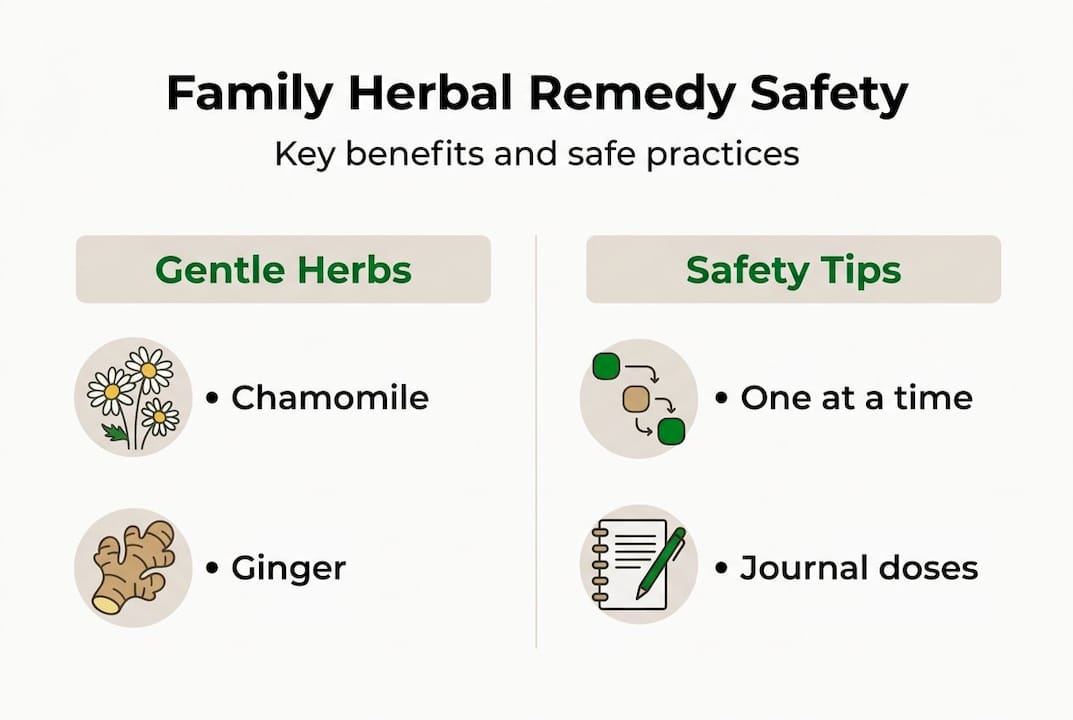
Pro Tip: Introduce one new herbal remedy at a time and wait at least a week before adding another. This makes it much easier to identify the source if any reaction occurs.
Integrating herbal remedies into everyday family routines
The best herbal routine is one your family will actually stick with. That means making it enjoyable, low-pressure, and woven naturally into habits you already have.
Here are practical, real-world ways to bring herbs into daily life:
- Brew chamomile tea as part of a calming bedtime ritual for children and adults
- Add fresh ginger to soups, smoothies, or warm lemon water during cold season
- Use elderberry syrup (store-bought or homemade from cooked berries) as a seasonal immune support habit
- Grow a small herb garden with kids to build curiosity and connection to plants
- Swap sugary drinks for herbal infusions like hibiscus or peppermint at family meals
Building daily wellness routines around herbs works best when they complement good nutrition, consistent hydration, and adequate sleep. Herbs are most effective when combined with healthy meals and rest, and families should monitor for any unexpected effects when starting something new.
Understanding herbal ingredient uses in depth helps you make smarter choices about what to include and when. Seasonal rotation is a great strategy: focus on immune-supporting herbs in fall and winter, digestive herbs in warmer months when diets shift.
Pro Tip: Keep a simple family remedies journal. Note what you used, the dose, how long, and any changes you noticed. Over time, this becomes an invaluable personal reference that no generic article can replace.
Remember: herbal remedies are partners to medical care, not replacements. If symptoms are severe, persistent, or worsening, your family doctor is always the right first call.
Our take: Navigating herbal remedies as a modern family
We have seen a lot of herbal trends come and go. Mushroom everything, detox teas promising overnight results, influencer-endorsed supplements with no third-party testing. Families deserve better than that noise.
Our honest perspective: a food-first, supplements-second approach works best for most families. The herbs with the strongest track records, like ginger, chamomile, and honey, are also the simplest and most accessible. You do not need an elaborate supplement stack to support your family's health naturally.
What actually shapes results is rarely the herb itself. It is the context: the dose, the duration, the quality of the product, and the overall lifestyle surrounding it. A chamomile tea at bedtime works partly because of the herb and partly because of the ritual of slowing down.
We also encourage families to be skeptical of social media wellness trends. If a product is not independently tested and transparently labeled, it does not belong in your family's routine. Read the guidance for parents we have put together to help you filter signal from noise. It is okay to keep it simple. Focus on what genuinely works for your family, not what is trending this month.
Ready to explore safe, natural herbal remedies for your family?
You now have a solid foundation for making informed, confident choices about herbal wellness for every member of your family. The next step is finding products you can actually trust.

At Finer Holistics, every product is handcrafted with carefully selected, quality-tested ingredients and designed with family wellness in mind. Whether you are looking for herbal detox remedies to support your body's natural systems or exploring family-safe herbal wellness solutions for everyday health, we have options built on real herbal knowledge and transparent sourcing. Browse our collection and find the right starting point for your family's natural wellness journey.
Frequently asked questions
Which herbal remedies are safest for young children?
Chamomile, cooked elderberry, and ginger are among the gentlest options for children, but always check with your pediatrician before introducing any herb to a young child's routine.
Can herbal remedies replace antibiotics or prescription medications?
No. Herbal remedies are not approved substitutes for medical treatment and should always complement, not replace, care from a licensed healthcare provider.
Are detox teas or supplements safe for kids?
No strong evidence supports commercial detox products for children. A diet rich in whole foods, plenty of water, and good sleep is the safest and most effective approach to natural detox for kids.
What are the most common side effects of herbal remedies?
Most side effects are mild, like digestive upset or skin reactions, but allergies and interactions are more common in children and can occasionally be serious, especially when herbs are combined with medications.
How can I make sure herbal remedies are safe and effective?
Quality and professional oversight are the two most important factors. Choose reputable, third-party tested brands, introduce herbs one at a time, and loop in your healthcare provider before starting anything new.