
TL;DR:
- Herbal synergy occurs when combining herbs produces effects greater than their individual benefits.
- Traditional systems like TCM and Ayurveda have used multi-herb formulas, confirming the power of plant teamwork.
- Safe and effective use involves choosing well-researched blends, understanding preparation methods, and consulting professionals.
Many people reach for a single herb and expect full results. It's a reasonable instinct, but it misses something important: some of the most powerful effects in herbal medicine come not from one plant alone, but from how plants work together. Herbal synergy refers to the combined effect of multiple herbs exceeding the sum of individual effects. This guide will walk you through what synergy means, how it works in your body, what the evidence actually shows, and how to apply it safely in your own wellness routine.
Table of Contents
- What is herbal synergy?
- How does herbal synergy work? The main mechanisms explained
- Real-world evidence: When synergy shines and when it fails
- How to harness herbal synergy safely in your wellness routine
- The real-world view: Why smart synergy beats random mixing every time
- Explore herbal synergy with Finer Holistics
- Frequently asked questions
Key Takeaways
| Point | Details |
|---|---|
| Greater effect together | Combining certain herbs produces stronger wellness benefits than using each one alone. |
| Mechanism matters | Understanding the science behind how herbs interact helps you pick effective blends. |
| Evidence is mixed | Studies support synergy but also caution against random mixing and highlight the need for solid research. |
| Safety first | Use proven, tradition-backed blends and consult professionals to avoid risks. |
What is herbal synergy?
Herbal synergy is what happens when two or more herbs, combined, produce an effect that neither could fully achieve on its own. It's not just about adding ingredients together. It's about the relationship between them.
"Herbal synergy refers to the combined effect exceeding the sum of individual effects, rooted in traditional systems like TCM and Ayurveda."
This idea is not new. Traditional Chinese Medicine (TCM) has used multi-herb formulas for thousands of years, often categorizing herbs into roles like "emperor," "minister," and "assistant" within a formula. Ayurveda, India's ancient wellness system, also builds most of its remedies around combinations, not single plants. These traditions understood something that modern research is now starting to confirm: plants often perform better as a team.
For modern wellness seekers, this matters a lot. If you're exploring a herbal wellness guide to support digestion, immunity, or energy, understanding synergy can completely change how you choose and use your herbs.
Here's what makes synergy different from a simple additive effect:
- Additive effect: Two herbs each contribute their own benefit, and the result is roughly the sum of both.
- Synergistic effect: The combination produces an outcome greater than what either herb could deliver alone, often because they work through different but complementary pathways.
- Antagonism: The opposite of synergy. Some combinations can actually reduce effectiveness or increase unwanted effects.
Knowing the difference is the first step toward making smarter choices with natural health approaches that actually work for your body.
How does herbal synergy work? The main mechanisms explained
With a foundation in what synergy is, the next step is understanding how it actually works in your body. There are three primary mechanisms, and each one explains a different way that herbs can amplify each other's effects.
| Mechanism | What it means | Real-world example |
|---|---|---|
| Physicochemical | Herbs interact during preparation to release or stabilize compounds | Green tea and peppermint co-maceration enhances antioxidant release |
| Pharmacokinetic | One herb changes how another is absorbed, distributed, or metabolized | Black pepper increases curcumin absorption by up to 2,000% |
| Pharmacodynamic | Herbs act on different biological targets but produce a shared outcome | Ginger and turmeric both reduce inflammation through distinct pathways |
According to research on herbal synergy mechanisms, these interactions include physicochemical, pharmacokinetic, and pharmacodynamic effects, each playing a distinct role in how a blend performs.
Here's how to think about each one in practice:
- Physicochemical synergy happens during preparation. When you brew a tea or make a tincture using multiple herbs together, the compounds interact in the liquid itself. This can stabilize active molecules or release compounds that wouldn't extract as well on their own.
- Pharmacokinetic synergy is about delivery. Black pepper's piperine is the most cited example. It inhibits certain liver enzymes that would otherwise break down curcumin too quickly, allowing far more of it to reach your bloodstream.
- Pharmacodynamic synergy is about targeting. When two herbs work on different parts of the same problem, like inflammation or immune response, they can produce a broader, more sustained effect than either one alone.
Pro Tip: When choosing a blend, look for products that use co-extraction or co-maceration methods. These preparation styles allow herbal ingredient benefits to interact during the process itself, not just after the fact.
Real-world evidence: When synergy shines and when it fails
Knowing the science is important, but what does synergy actually deliver, or risk, in real life? Let's see the data.

Some of the most compelling evidence comes from polyherbal research. A study on antioxidant synergy found that green tea combined with peppermint showed nearly additive to synergistic antioxidant effects. A separate animal study using a blend of black seed, dill, sage, and coriander showed improved growth, antioxidant markers, and immune response. Polyherbal blends targeting blood sugar also outperformed single-herb approaches in reducing glucose and lipid levels.
| Combination | Outcome | Type |
|---|---|---|
| Ginger + turmeric + black pepper | Enhanced anti-inflammatory absorption | Synergistic win |
| Green tea + peppermint | Boosted antioxidant activity | Synergistic win |
| Some TCM herb pairs | Toxicity potentiation or reduced efficacy | Risky combination |
| Herbs + pharmaceutical drugs | Unpredictable interactions | High-risk scenario |
But synergy is not guaranteed. Research on risks in herbal combinations confirms that antagonism and even toxicity potentiation can occur in some pairings. Random mixing is genuinely risky.
Here's how to tell the difference in your own experience:
- Signs a blend may be helping: Gradual improvement in your target area, no new symptoms, stable energy, better digestion or sleep depending on the goal.
- Signs a blend may be causing issues: New headaches, digestive upset, skin reactions, changes in medication effectiveness, or unusual fatigue.
Understanding the range of herbal remedy types and how they're formulated gives you a much stronger foundation for making safe choices.
How to harness herbal synergy safely in your wellness routine
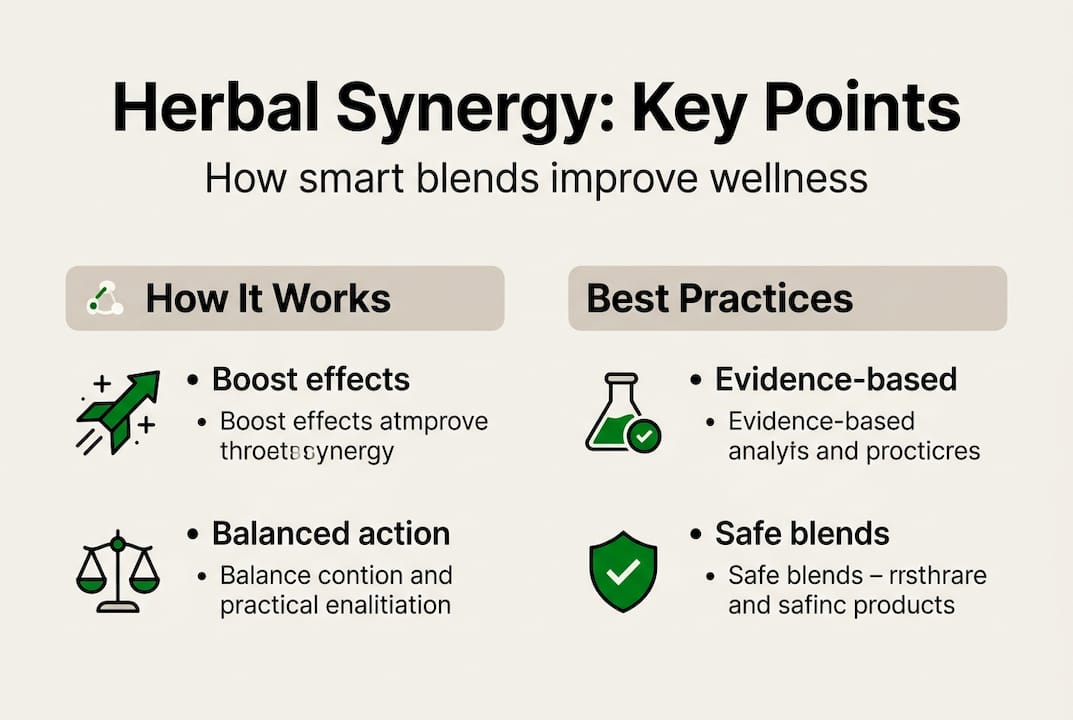
To empower your own wellness, here's how you can put herbal synergy into practice, safely and effectively.
The most important starting point is choosing blends that are grounded in both tradition and some level of research evidence. Formulas used for centuries in TCM or Ayurveda have a built-in track record. That doesn't mean they're perfect, but it does mean they've been tested in real human experience over time. Polyherbal safety and use research supports time-tested combinations like ginger, turmeric, and black pepper via teas or tinctures as a solid starting point.
At the same time, current research reminds us that while synergy can enhance efficacy and potentially reduce the doses needed, the evidence base is still largely preclinical. Human trials are growing but not yet dominant. That means informed caution is smart, not pessimistic.
Here are the steps to build a safe synergy practice:
- Start with a clear wellness goal. Are you supporting digestion, immunity, detox, or energy? Your goal should guide which combination you choose.
- Choose tradition-backed blends. Look for formulas with documented use in TCM, Ayurveda, or other established herbal traditions.
- Check preparation methods. Co-extracted teas and tinctures preserve more of the synergistic interactions than mixing separate capsules.
- Consult a professional. Especially if you take medications or have a health condition, a herbalist or healthcare provider can help you avoid interactions.
- Monitor and adjust. Give a blend 4 to 6 weeks, track your results, and pay attention to any changes, positive or negative.
Pro Tip: Whole herbs in teas or tinctures tend to offer a more "buffered" synergistic experience, while standardized extracts deliver stronger, more targeted effects. For general wellness support, nourishing herbal teas are often the gentlest and most accessible way to start.
The real-world view: Why smart synergy beats random mixing every time
Drawing together everything we've covered, here's something worth saying plainly: the biggest mistake people make with herbal blends is treating them like a smoothie. Throw in what sounds good and hope for the best.
The research tells a different story. A review of herbal synergy evidence quality found that while synergy is promising, much of the evidence is rated very low quality due to bias, heterogeneity, and poor standardization. Whole herbs preserve the entourage effect better than isolates, but they also come with lower potency and less predictability.
What does that mean practically? It means the herbs you combine, and how you combine them, genuinely matters. A random mix of five popular herbs is not automatically better than a carefully formulated blend of two. In fact, it might be worse. Herb-drug interactions, antagonistic pairings, and inconsistent preparation methods all introduce real variables that can undermine your goals.
At Finer Holistics, we've seen this play out repeatedly. People come to us after months of trying different combinations with little to show for it. When they shift to intentional, evidence-informed blends, things start to change. Not because of magic, but because thoughtful formulation actually works. The tradition is there. The emerging science is there. What's often missing is the intention behind the blend.
Explore herbal synergy with Finer Holistics
Ready to put the power of herbal synergy into action? Here's where to start.
At Finer Holistics, every blend we create is formulated with intention, drawing on traditional wisdom and available evidence to support real wellness goals. We don't just mix herbs. We think about how they work together.
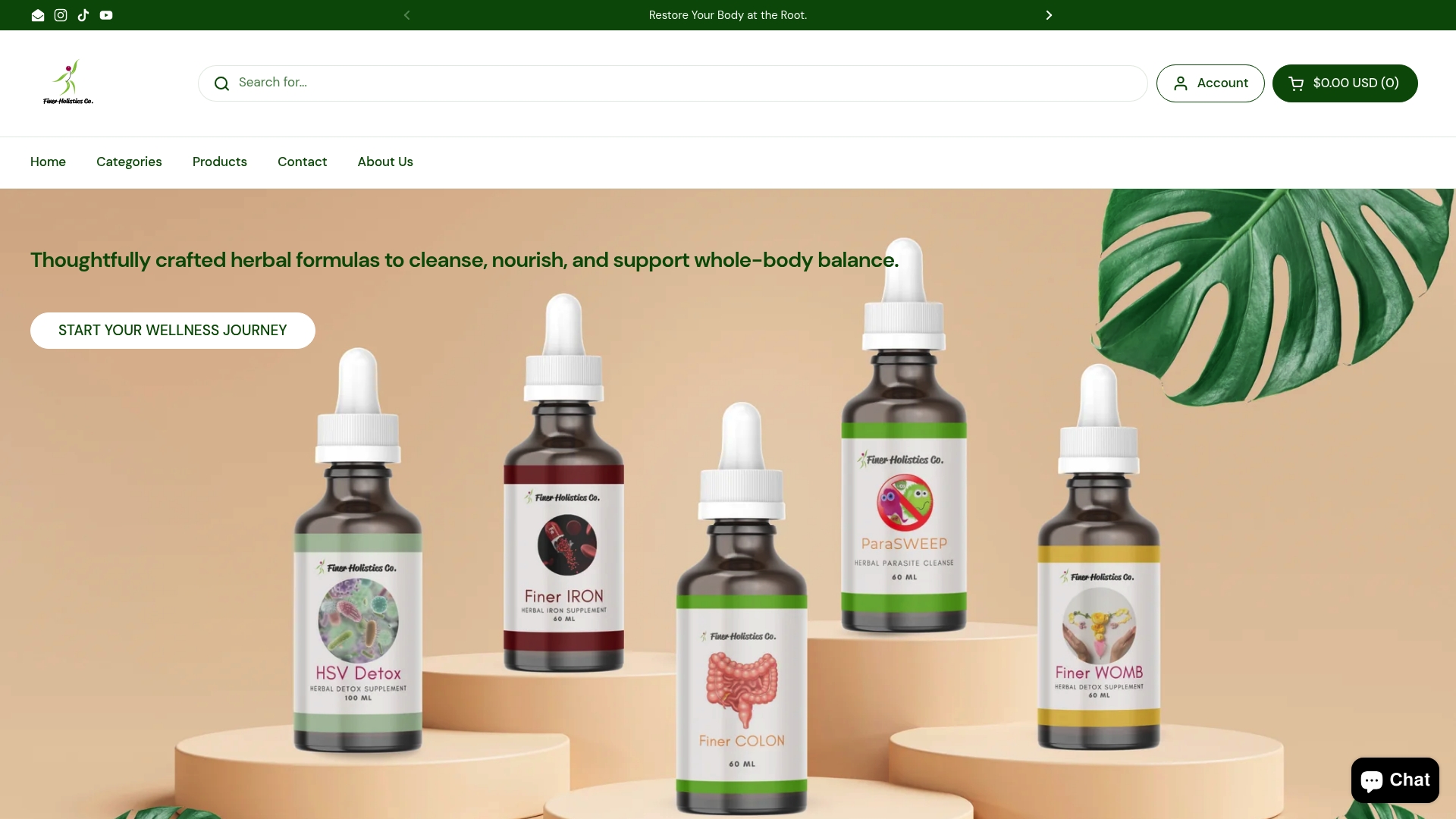
Whether you're looking to support detox with our detox and cleanse blends, explore targeted support through our women's wellness herbs, or simply want to learn more, you'll find everything you need at Finer Holistics. We're here to help you build a smarter, safer herbal wellness routine, one intentional blend at a time.
Frequently asked questions
Is herbal synergy supported by scientific research?
Yes. Preclinical and animal studies show that smart combinations can boost effects, but more rigorous human trials are still needed before broad clinical claims can be made.
Can mixing random herbs be dangerous?
It can be. Antagonism and toxicity potentiation are documented risks in certain combinations, which is why evidence-backed formulas and professional guidance matter.
Should I choose whole herbs or standardized extracts for synergy?
Whole herbs preserve more plant compounds for a buffered, entourage-style effect, while extracts offer stronger, more targeted actions with less of that natural complexity.
How can I tell if a blend is working for me?
Track specific changes in energy, digestion, sleep, or your target wellness goal over 4 to 6 weeks, and always watch for any new or unexpected symptoms that might signal an interaction.
Recommended
- Types of herbal remedies for natural wellness in 2026
- Herbal wellness: evidence, safety & best practices 2026
- What is Herbal Wellness? A 2026 Guide to Natural Health – Finer Holistics Co.
- Why avoid synthetic supplements for natural wellness in 2026 – Oxyhealth
- Herbal tea benefits: a guide for women over 40 – Caribella