
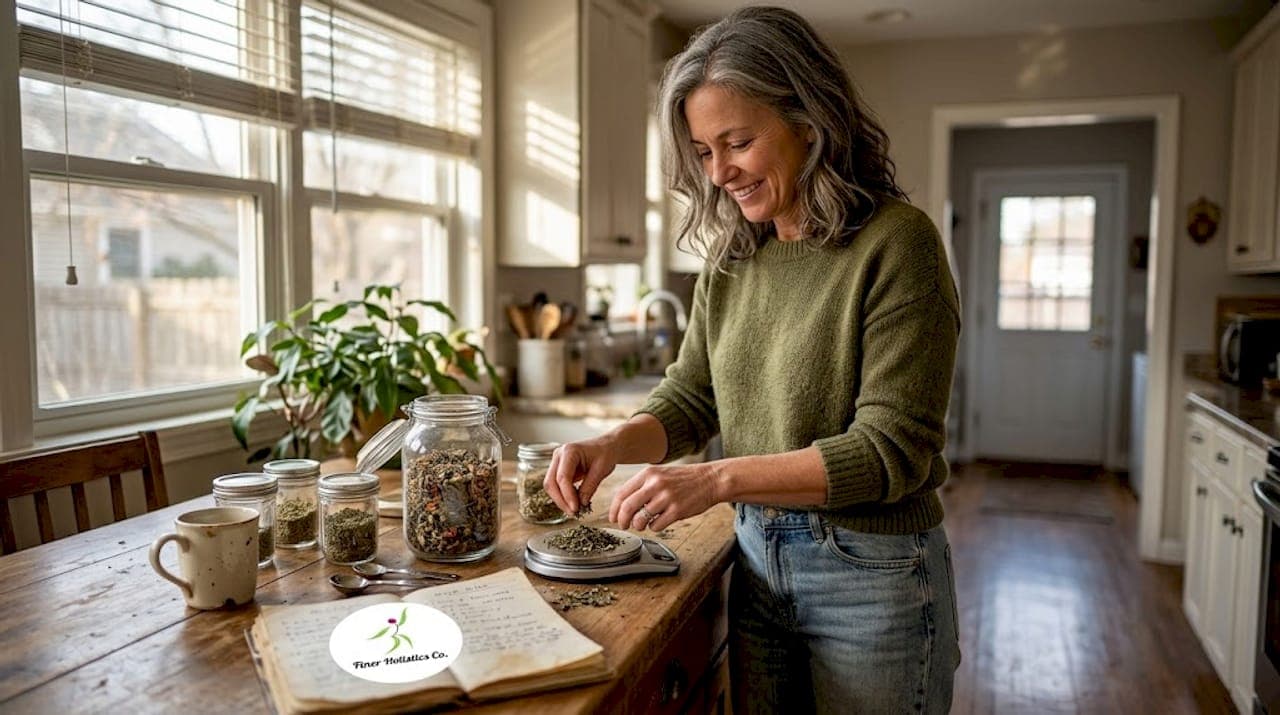
TL;DR:
- Herbal tea blending allows personalized solutions for wellness goals and control over ingredients.
- Understanding herb roles, flavor profiles, and synergy enhances effective and safe blends.
- Proper preparation, steeping, and adjustments improve taste, benefits, and long-term herbal wellness skills.
You want to feel calmer, sleep better, or support your digestion naturally, but you open a search tab and get buried in conflicting advice. Which herbs actually work together? How much do you use? Where do you even start? Herbal tea blending gives you a personalized, plant-based solution that adapts to your body and your goals. When you blend your own teas, you control every ingredient, every proportion, and every wellness intention behind the cup. This guide walks you through everything, from gathering supplies to brewing your first batch, so you can confidently create herbal blends that actually serve your health.
Table of Contents
- Gathering your tools and ingredients
- Understanding herbal blending basics
- Step-by-step herbal tea blending process
- Brewing and enjoying your herbal tea blend
- Troubleshooting and perfecting your blends
- Why herbal tea blending is a lasting wellness skill
- Explore herbal wellness resources and blends
- Frequently asked questions
Key Takeaways
| Point | Details |
|---|---|
| Start with quality tools | Using the right teapots, infusers, and organic herbs is the foundation of great blends. |
| Blend for both flavor and wellness | Combine base, accent, and flavoring herbs that work synergistically toward your wellness goals. |
| Follow step-by-step instructions | Precise measuring, mixing, and brewing ensure enjoyable and beneficial results. |
| Adjust and troubleshoot | Tweak proportions and record your experiments to perfect your favorite blends over time. |
| Explore for deeper benefits | Herbal tea blending is a creative journey that puts wellness choices in your hands. |
Gathering your tools and ingredients
Before you can start blending, it's important to have the right tools and quality ingredients on hand. You don't need a professional apothecary setup. A few simple kitchen tools and a solid selection of herbs will get you started.
Essential tools to have ready:
- A ceramic or glass teapot with a built-in infuser
- Small mixing bowls (2-3 in different sizes)
- Measuring spoons (1/4 tsp, 1/2 tsp, 1 tsp)
- Airtight glass jars for storing blends
- A kitchen scale for precise measurements
- Labels and a marker for dating your jars
- A fine mesh strainer as a backup
Having these on hand makes the process smoother and reduces the guesswork. A kitchen scale is especially helpful once you start blending in larger quantities.
| Tool | Why it matters |
|---|---|
| Glass teapot with infuser | Even steeping, no flavor contamination |
| Mixing bowls | Accurate blending without spills |
| Airtight glass jars | Keeps herbs fresh and potent |
| Measuring spoons | Consistent proportions every time |
| Labels | Tracks blend name, date, and ingredients |
Now for the ingredients. High-quality, organic herbs enhance both wellness and flavor in your blends. Look for herbs labeled food-grade, dried, and preferably certified organic. Avoid anything with added fragrances or fillers.
Herbs generally fall into three roles in a blend:
- Base herbs make up the majority of the blend (50-60%). Examples: chamomile, rooibos, lemon balm, nettle.
- Accent herbs add a supporting wellness effect (20-30%). Examples: peppermint, elderflower, tulsi.
- Flavoring herbs provide taste or aroma depth (10-20%). Examples: rose petals, ginger, cinnamon, licorice root.
Exploring the full range of types of herbal remedies can help you understand which plants have traditionally been used for specific wellness needs, so you shop with purpose.
Pro Tip: Store your dried herbs away from heat, light, and moisture. A cool cabinet or pantry shelf in dark glass jars is ideal. Most dried herbs stay potent for 12-18 months when stored properly.
Understanding herbal blending basics
With your supplies gathered, it's time to understand the foundations of herbal blending. Blending is part art, part intention. Once you understand how herbs interact, the creative possibilities open up quickly.
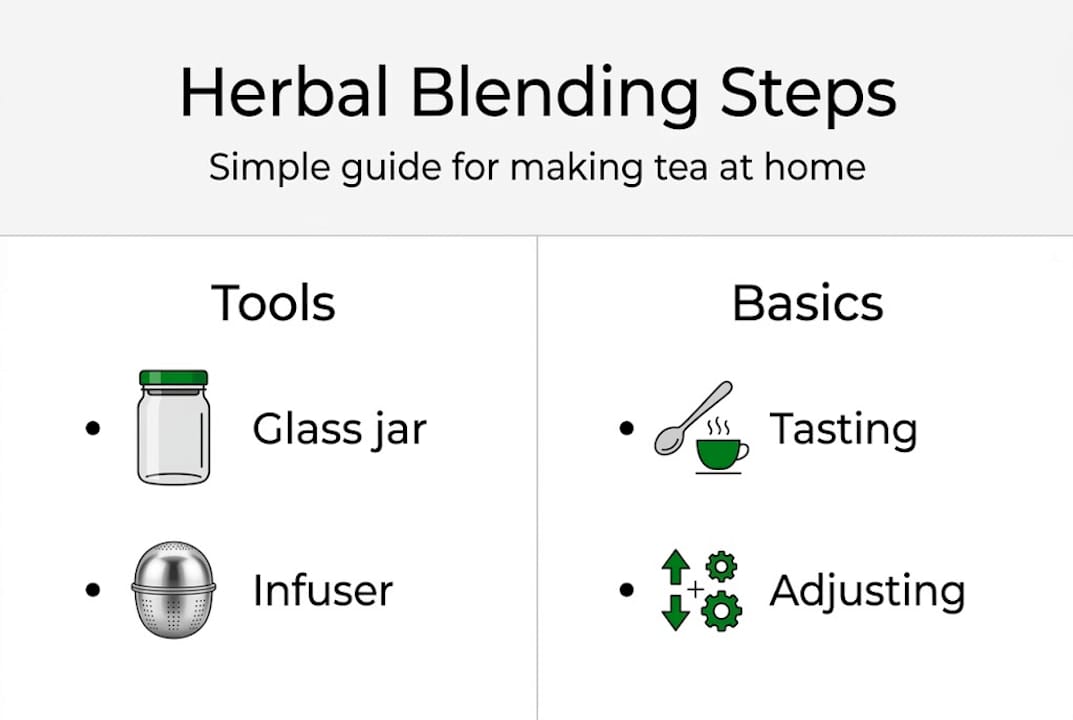
Blending herbs with synergistic properties can maximize both health benefits and flavor. Synergy simply means that two or more herbs work better together than they would alone. Chamomile and lemon balm, for example, are both calming, but together they create a noticeably deeper relaxation effect.
Herb flavor profiles fall into a few key categories:
- Floral: Chamomile, rose, lavender
- Earthy: Nettle, dandelion root, burdock
- Citrus: Lemon verbena, lemon balm, orange peel
- Spicy: Ginger, cinnamon, black pepper, cardamom
Mixing a floral base with a citrus accent, for instance, creates a bright, uplifting cup. Pairing earthy with spicy creates a grounding, warming blend. You don't need to memorize rules. Just taste as you go.
Common wellness goals and matching herb combinations:
- Calm and sleep support: Chamomile + lemon balm + lavender. Try browsing best teas for stress relief for more ideas.
- Digestion and bloating: Peppermint + fennel + ginger. More options are covered in guides to herbal teas for digestion.
- Energy and focus: Tulsi + peppermint + rosemary
- Immune support: Elderberry + echinacea + ginger
| Blend focus | Base herb | Accent herb | Flavoring herb |
|---|---|---|---|
| Wellness first | Nettle or chamomile | Elderflower or tulsi | Ginger or rose |
| Flavor first | Rooibos or lemon balm | Peppermint or hibiscus | Cinnamon or licorice root |
A note on safe blending: Never exceed the recommended daily amount for any single herb. Some herbs, like licorice root or senna, can cause side effects in large quantities. When in doubt, keep flavoring herbs at 10-15% of your total blend and research each herb before adding it.
Step-by-step herbal tea blending process
Now that you know which herbs work well together, let's outline the actual blending process. This is where things get hands-on and genuinely fun.
A typical tea blend uses 3-5 ingredients for balanced flavor and effect. Keeping your blend focused avoids muddled flavors and makes it easier to identify what's working.
Step-by-step blending instructions:
- Choose your intention. Decide what wellness goal this blend serves. Calm, energy, digestion? This guides every herb choice you make.
- Select your herbs. Pick 1 base herb, 1-2 accent herbs, and 1 flavoring herb. Start simple.
- Measure your base. Use 3 parts base herb. For a small sample batch, try 3 teaspoons of chamomile.
- Add accent herbs. Use 1-2 parts accent herb. Add 1-2 teaspoons of lemon balm or peppermint.
- Add flavoring. Use a half part or less of your flavoring herb. Start with 1/4 to 1/2 teaspoon of rose petals or ginger.
- Mix gently. Combine in a small bowl. Stir slowly so you don't break up delicate petals or leaves.
- Smell the blend. Trust your nose. If something is overpowering or off, adjust now before you brew.
- Label your jar. Write the blend name, ingredients, ratios, and the date on your label before storing.
- Brew a test cup. Always test before making a large batch. This is your quality check.
Pre-blending (making a full jar in advance) works well once you've tested and confirmed a recipe. Single-cup blending is perfect for experimentation when you want to try something new without committing to a large quantity.
The herbal tea nourishment guide goes deeper into the wellness side of each herb if you want to cross-reference benefits while you blend.
Pro Tip: Make a 1-2 tablespoon sample batch first. It's much easier to adjust a small test batch than to fix a full jar of a blend that isn't quite right.
Brewing and enjoying your herbal tea blend
You've blended the perfect mix. Now it's time to brew and savor your creation. The way you brew your tea matters just as much as how you blend it.
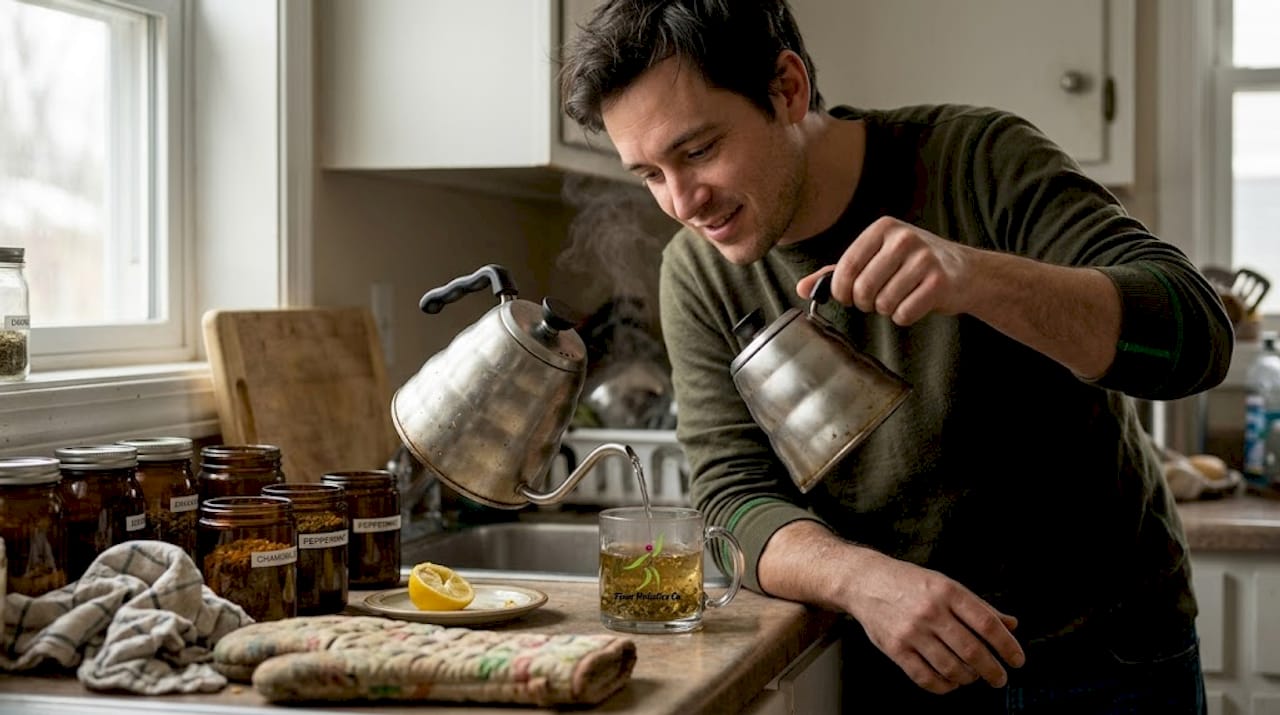
Proper steeping time and water temperature help extract the most health benefits from herbs. Water that's too hot can destroy delicate compounds in floral herbs, while water that's too cool won't pull the full depth of flavor from roots and spices.
General steeping guide by herb type:
- Floral herbs (chamomile, rose, lavender): 190-200°F, steep 5-7 minutes
- Leaf herbs (peppermint, lemon balm, nettle): 200-210°F, steep 5-8 minutes
- Root and bark herbs (ginger, cinnamon, burdock): 200-212°F, steep 8-12 minutes
- Berry and seed herbs (elderberry, fennel): 200-212°F, steep 8-10 minutes
Tips for adjusting taste and strength:
- Too bitter? Reduce steeping time or lower the proportion of bitter herbs like dandelion.
- Too weak? Increase your base herb amount or steep 1-2 minutes longer.
- Too sweet? Cut back on licorice root or cinnamon.
- Too strong overall? Use less total herb per cup. Most blends need about 1-2 teaspoons per 8 oz of water.
For serving, enjoy your tea fresh. Herbal teas are best within 30 minutes of brewing. If you make a larger pot, store leftovers in the fridge and drink within 24 hours. You can also brew a concentrate and dilute with warm water when ready to serve.
Consistent herbal tea drinkers often report meaningful improvements in sleep, digestion, and stress levels over 4-6 weeks of regular use. If you're supporting a detox or cleansing routine, resources on herbal supplements for detox can guide you toward complementary herbs to explore.
Don't be afraid to experiment. Add a strip of orange peel. Try a pinch of cardamom. Blending is a creative practice, not a rigid formula.
Troubleshooting and perfecting your blends
Even with careful planning, a few hurdles can crop up as you blend teas at home. Most issues are easy to fix once you know what to look for.
Adjusting proportions can help if a blend is too strong, bitter, or bland. The key is making small changes, one ingredient at a time, so you can pinpoint the problem.
Common mistakes and quick fixes:
- Oversteeping: Results in bitter, harsh flavor. Fix it by reducing steep time by 1-2 minutes per cup.
- Too much accent herb: The supporting herb overpowers the base. Reduce to 1 part accent per 3 parts base.
- Clashing flavors: Strong spicy and strong floral rarely mix well. Test flavor combinations before blending a full jar.
- Bland or flat taste: Usually means too little flavoring herb or not enough steep time. Add a small amount of ginger or citrus peel to brighten things up.
- Medicinal or unpleasant smell: Some herbs like valerian are potent. Balance with sweeter herbs or reduce the amount significantly.
Looking at what makes herbal teas that work effective can also help you diagnose why a blend isn't delivering the wellness results you expected.
Beyond taste, assess your blend by its aroma (should be pleasant and layered), its color when brewed (rich color usually signals good extraction), and how you feel after drinking it consistently for a week or two.
Pro Tip: Keep a blending journal. Write down each recipe, the ratios you used, how it tasted, and any adjustments you made. This turns trial and error into a real learning process, and you'll build a personal recipe collection over time.
Why herbal tea blending is a lasting wellness skill
Once you've experimented and refined your blends, it's worth considering why this practice matters long-term. Most wellness trends come and go. Herbal tea blending is different because it grows with you.
Store-bought teas are convenient, but they're blended for the average person. Your body isn't average. Your stress levels shift, your sleep needs change, your digestion fluctuates with the seasons. A homemade blend can change with you. That's something no brand on a shelf can offer.
There's also something quietly powerful about the act itself. Measuring herbs, smelling combinations, testing and adjusting. It pulls you into the present moment in a way that a pre-made teabag simply doesn't. It builds real herbal knowledge, not just consumption habits.
We believe that learning herbal wellness for beginners is one of the most empowering things you can do for your long-term health. When you understand plants and how they work, you're never completely dependent on outside solutions. That knowledge stays with you, and it gets richer the more you practice.
Explore herbal wellness resources and blends
Ready to keep growing your knowledge or try carefully crafted blends? Whether you want to stock up on quality herbs or explore wellness solutions designed specifically for your needs, we've gathered the best resources in one place.
At Finer Holistics, every product is crafted with the same intentionality you're bringing to your blending practice. If you're looking for support designed for women's health, our women's wellness herb blends are a great starting point. For those focused on cleansing and renewal, explore our herbal detox remedies collection. And for deeper reading on herbs, blending tips, and natural wellness education, the full library of guides is waiting for you at Finer Holistics.
Frequently asked questions
What are the most beginner-friendly herbs for tea blends?
Chamomile, peppermint, and lemon balm are safe, mild, and versatile choices. These beginner herbal teas are gentle yet effective, making them ideal for your first blends.
How do I know if herbs are compatible for blending?
Look for herbs with similar wellness goals and complementary flavors, and start with small test batches. Blending herbs with synergistic effects improves both taste and wellness benefits.
How long should I steep blended herbal tea?
Most blends steep for 5-10 minutes in hot water, but check specific herb recommendations for best results. Proper steeping time ensures maximum extraction of benefits from each herb.
Are there herbs I should avoid mixing?
Yes, avoid mixing strong laxatives or stimulants without thorough research, and always check safety guidelines for each herb. Safe herbal blending is essential to avoid unwanted interactions and get the results you're looking for.