
TL;DR:
- Effective herbal stress-relief teas contain proven active compounds and rigorous clinical evidence.
- Chamomile, lavender, ashwagandha, and green tea target different stress pathways with scientific backing.
- Ritual and routine amplify herbal benefits, making consistent practice vital for holistic stress reduction.
You reach for a calming cup of tea after a brutal day, but the wellness aisle is stacked with hundreds of options all promising to melt your stress away. Which ones actually work? With bold marketing claims on every box, it's genuinely hard to know what's evidence-based and what's just clever packaging. The good news is that science has caught up with herbal tradition in meaningful ways. This guide cuts through the noise by covering what makes an herbal tea genuinely effective for stress relief, which specific teas have clinical research behind them, how they compare, and how to choose the right one for your lifestyle.
Table of Contents
- What makes a great stress-relief herbal tea?
- Chamomile: The gentle classic
- Lavender, ashwagandha, and green tea: Research-backed options
- Comparing top herbal teas for stress: Strengths, mechanisms, and ideal fits
- How to choose and use your herbal stress relief tea
- A fresh perspective: Why routine and self-care matter more than any one tea
- Find your perfect herbal blend at Finer Holistics
- Frequently asked questions
Key Takeaways
| Point | Details |
|---|---|
| Choose evidence-based teas | Select herbal teas proven to reduce stress hormones and anxiety backed by clinical studies. |
| Chamomile, lavender, ashwagandha, and green tea excel | These four herbal teas have the strongest science and flexible benefits for stress relief. |
| Preparation and ritual matter | Enjoy tea mindfully to enhance its effects and support a sustainable stress-relief habit. |
| Check safety tips | Always consider allergies, pregnancy, and medication interactions before trying new herbal teas. |
What makes a great stress-relief herbal tea?
Not every tea labeled "calming" or "relaxing" earns that description. Understanding what separates a truly effective stress-relief tea from a pleasant-smelling placebo helps you shop smarter and feel better results.
The most reliable stress-relief teas share a few core qualities. They contain botanical compounds with documented effects on the nervous system, such as reducing cortisol levels, calming overactive brain activity, or supporting deeper sleep. They also have at least some human clinical evidence behind them, ideally randomized controlled trials (RCTs), not just lab studies on isolated cells.
Here are the key features to look for:
- Proven active compounds: Look for apigenin in chamomile, linalool in lavender, L-theanine in green tea, or withanolides in ashwagandha. These are the compounds researchers actually study.
- Standardized extracts: A tea listing "chamomile" could contain almost anything. Standardized extracts guarantee a specific concentration of the active compound.
- Transparent labeling: Avoid vague "proprietary blends" with no ingredient quantities listed.
- Appropriate preparation guidance: Steep time, water temperature, and whether you cover the cup during steeping all affect how much of the active compound you actually extract.
- Third-party quality testing: Especially important for adaptogens like ashwagandha, where potency varies widely between brands.
Understanding herbal tea effectiveness at the ingredient level is one of the most empowering things you can do for your wellness routine. It shifts you from passive consumer to informed herbalist.
One mechanism worth knowing: apigenin binds GABA receptors, the same receptors targeted by many anti-anxiety medications, which is why chamomile produces genuine calming effects rather than just a warm, cozy feeling.
"The most effective herbal teas aren't the ones with the prettiest packaging. They're the ones with identifiable active compounds and at least one well-designed human study behind them."
For a broader look at safe and responsible herbal use, herbal tea safety tips are worth reviewing before you build your daily ritual.
Pro Tip: Flip the box over before you buy. If you can't find a specific herb name, a listed quantity, or any mention of extract standardization, put it back.
Chamomile: The gentle classic
With selection criteria in mind, let's explore which herbal teas actually meet the mark, starting with a classic favorite.
Chamomile has been used for thousands of years, but what makes it stand out today is that it has actually been tested in rigorous clinical settings. The mechanism is straightforward: chamomile contains apigenin, a flavonoid that binds to GABA-A receptors in the brain. GABA is your brain's primary "slow down" signal. When apigenin activates those receptors, you feel calmer without sedation.
A significant HAM-A reduction was recorded in a randomized, double-blind, placebo-controlled trial involving patients with generalized anxiety disorder. The Hamilton Anxiety Rating Scale score dropped significantly in the chamomile group compared to placebo (P=0.047). That's a meaningful result from a rigorous study design.
"Chamomile isn't just folk medicine. It's one of the few herbal remedies that has cleared the bar of a placebo-controlled clinical trial for anxiety."
For practical use, chamomile works best as an evening ritual. Steep it covered for 5 to 10 minutes to trap the volatile oils that carry the active compounds. Use high-quality dried flowers or a tea bag from a brand that lists chamomile extract specifically.
For more ideas on building a nourishing herbal routine, herbal tea nourishment tips offer a practical starting point.
Chamomile at a glance:
- Pros: Gentle, widely available, pleasant mild flavor, well-tolerated by most people, caffeine-free
- Best for: Nighttime wind-down, mild daily stress, people new to herbal teas
- Cons: May trigger reactions in people with ragweed or daisy family allergies; effects are subtle compared to stronger adaptogens
- Timing: 30 to 60 minutes before bed for sleep support, or any time for mild daytime calm
Chamomile is the ideal starting point if you're new to herbal stress relief. It's forgiving, pleasant, and backed by real science.
Lavender, ashwagandha, and green tea: Research-backed options
While chamomile stands as the gentle classic, let's look at three other herbal teas with impressive modern research backing.

Lavender has moved well beyond aromatherapy into clinical territory. A 34% GAD-7 reduction was recorded in a study on lavender herbal tea, along with a 27-minute increase in deep sleep and a 22% drop in cortisol levels. Those are substantial numbers. Lavender works primarily through linalool, a terpene that interacts with the limbic system and helps regulate the stress response. It's particularly useful for people whose stress shows up as poor sleep or racing thoughts at night.
Ashwagandha is an adaptogen, meaning it helps your body regulate its stress response over time rather than producing an immediate calming effect. Research shows 30% cortisol reduction with significant improvements in stress scores (p<0.0001). It works by modulating the HPA axis, the hormonal pathway that controls how your body responds to chronic stress. Ashwagandha tea is best suited for people dealing with burnout, long-term fatigue, or sustained high-pressure environments.
Green tea contains L-theanine, an amino acid that promotes calm alertness without drowsiness. A systematic review of RCTs confirms that L-theanine consistently reduces stress and anxiety across multiple studies. Unlike the other options, green tea contains caffeine, which L-theanine actually smooths out, making it ideal for daytime focus without the jittery edge.
You can learn more about the herbal ingredient evidence behind these compounds, or explore common wellness tea myths that may be shaping how you shop.
Pro Tip: Lavender and chamomile pair well together for evening use. Ashwagandha blends better with warming spices like ginger or cinnamon. Always introduce one new herb at a time so you can identify what works for your body.
Quick safety notes:
- Lavender: generally safe; avoid therapeutic doses during pregnancy
- Ashwagandha: avoid with thyroid medications or autoimmune conditions without medical guidance
- Green tea: contains caffeine; avoid in the evening if you're caffeine-sensitive
Comparing top herbal teas for stress: Strengths, mechanisms, and ideal fits
To make your final decision easier, let's compare all these herbal teas side by side.
Each tea targets stress through a different biological pathway. Knowing that helps you match the right herb to your actual experience of stress, whether that's anxious thoughts, poor sleep, physical tension, or burnout.
| Tea | Primary mechanism | Key benefit | Best time | Safety notes |
|---|---|---|---|---|
| Chamomile | Apigenin binds GABA-A receptors | Gentle anxiety relief | Evening | Avoid with ragweed allergy |
| Lavender | Linalool modulates limbic system | Reduces cortisol 22%, improves deep sleep | Evening/night | Avoid in pregnancy (high doses) |
| Ashwagandha | Regulates HPA axis | Reduces cortisol up to 30% | Morning or afternoon | Avoid with thyroid meds |
| Green tea | L-theanine promotes calm alertness | Reduces anxiety, supports focus | Morning or midday | Contains caffeine |
The research outcomes across these teas span 2009 to 2026 and cover RCTs, systematic reviews, and controlled trials, giving you a solid foundation for any choice you make.
Here's a quick-reference guide based on lifestyle fit:
- You work high-pressure hours and need daytime calm: Green tea with L-theanine
- You struggle to fall asleep after a stressful day: Lavender or chamomile before bed
- You've been burned out for months and need systemic support: Ashwagandha over 8 to 12 weeks
- You want a gentle, beginner-friendly option: Chamomile, always
For families navigating stress together, herbal wellness for parents offers practical guidance on incorporating herbal teas into a household routine safely.
How to choose and use your herbal stress relief tea
You've seen the science-backed options. Here's how to choose and use herbal teas for safe, effective stress relief.
- Identify your stress pattern. Is your stress acute (a hard day) or chronic (ongoing burnout)? Chamomile and lavender suit acute stress. Ashwagandha is better for chronic stress over weeks.
- Start with a single-ingredient tea. Blends are tempting, but single-herb teas let you identify what's working and what isn't. Complexity comes later.
- Read the label carefully. Look for the specific herb name, extract type, and quantity per serving. Avoid anything that lists only "herbal blend" with no further detail.
- Choose a reputable source. Quality varies enormously between brands. Look for brands that provide third-party testing or clearly state their sourcing.
- Test for reactions. Try a small amount first if you have known plant allergies, especially to the daisy or mint families.
- Follow dosage and timing guidance. Most herbal teas are effective at 1 to 3 cups per day. Evening teas work best 30 to 60 minutes before bed. Adaptogens like ashwagandha often need 4 to 8 weeks to show full effects.
- Know when to consult a provider. If you're pregnant, managing a chronic illness, or taking prescription medications, speak with your healthcare provider before adding any herbal tea regularly. Herbal tea safety covers the key contraindications worth knowing.
Pro Tip: Keep a simple journal for the first two weeks. Note the tea, time of day, and how you felt an hour later. Patterns emerge quickly, and you'll dial in your ideal routine faster.
The goal isn't to find the "best" tea in the abstract. It's to find the right tea for your stress, your schedule, and your body.
A fresh perspective: Why routine and self-care matter more than any one tea
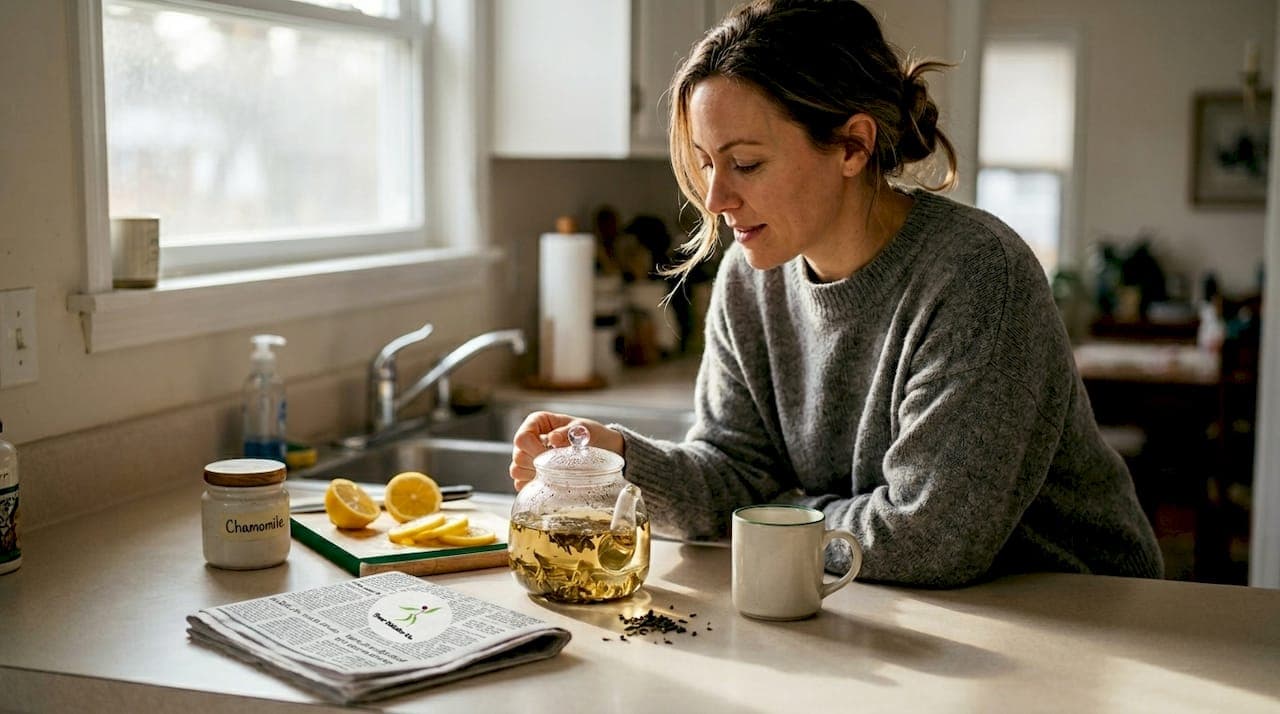
Here's something the wellness industry rarely tells you: the act of making tea may be as therapeutic as the tea itself. Pausing, boiling water, waiting, and sitting quietly for five minutes is a form of nervous system regulation. It's a pattern interrupt in a day that otherwise never slows down.
The research on chamomile, lavender, and ashwagandha is real and meaningful. But those studies measure the herb in controlled conditions. In real life, the ritual around the tea amplifies the effect. You're not just consuming a compound. You're signaling to your body that it's safe to slow down.
At Finer Holistics, we've seen this play out consistently. People who build a tea ritual, same time, same quiet space, same intentional pause, report better results than people who gulp tea between meetings. The herb matters. The habit matters more.
Sustainable stress relief isn't about finding the perfect adaptogen. It's about building a holistic herbal wellness practice that you actually stick to. Start simple. Be consistent. Let the plants do their work.
Find your perfect herbal blend at Finer Holistics
Ready to discover your own go-to herbal tea for de-stressing? At Finer Holistics, every blend is crafted with the same evidence-informed care you've read about here. We source high-quality herbs, prioritize transparency in our ingredient lists, and design our teas to support real wellness goals, not just pleasant flavors.
Whether you're drawn to the gentle calm of chamomile, the deep sleep support of lavender, or the adaptogenic power of ashwagandha, our women's wellness herbal blends offer curated options built around your needs. Explore our full range of handcrafted herbal teas and wellness blends at Finer Holistics and take the next step toward a calmer, more balanced day, naturally.
Frequently asked questions
Which herbal tea is most effective for reducing stress quickly?
Lavender tea shows some of the strongest evidence for rapid stress reduction, with a 34% decrease in anxiety scores recorded within four weeks of regular use.
Are there any risks or side effects to drinking herbal teas for stress?
Some herbal teas can cause allergic reactions or interact with medications. Review herbal tea safety guidelines and consult your doctor if you have existing health conditions or take prescription drugs.
How often should I drink herbal tea for stress management?
For most people, 1 to 3 cups per day is both safe and effective, though the right amount depends on the specific herb. L-theanine is effective at doses ranging from 15 to 250mg per serving, according to a systematic review.
Can I combine more than one herbal tea for better stress relief?
Combining herbs may offer additive benefits, but it also increases the chance of interactions. Review detox tea facts before blending, and always start with single-ingredient teas to understand how each herb affects you individually.