
TL;DR:
- Medicinal herbs have varied effects; some are supported by strong research, others rely on tradition.
- Herbs can interact with medications and pose safety risks; consulting healthcare providers is essential.
- Use clinical evidence, standardized extracts, and third-party testing to choose safe and effective herbal products.
Most people assume that because something comes from a plant, it must be safe. That belief drives millions toward herbal remedies each year, often without a second thought. The truth is more nuanced. Some medicinal herbs carry real, research-backed benefits. Others show mixed results, and a few carry genuine risks, especially when mixed with medications. This guide cuts through the noise. We'll cover what medicinal herbs actually are, how the active compounds inside them work, which ones have solid evidence behind them, and how to use them wisely without putting your health at risk.
Table of Contents
- What are medicinal herbs? Definitions and history
- How medicinal herbs work: Active compounds and effects
- Evidence-based benefits and uses of medicinal herbs
- Risks, limits, and safe practices for medicinal herbs
- Medicinal herbs: An evidence-guided approach for holistic wellness
- Explore herbal wellness safely with Finer Holistics
- Frequently asked questions
Key Takeaways
| Point | Details |
|---|---|
| Medicinal herbs defined | Medicinal herbs are plants used for their therapeutic properties, often in supplement or extract forms. |
| Mechanisms and effects | Herbs contain active compounds that act as antioxidants, anti-inflammatories, or antimicrobials. |
| Evidence varies | Some herbs are clinically proven for certain uses, while others lack strong evidence. |
| Risks and safety | Medicinal herbs can cause drug interactions, side effects, and are not always regulated for quality. |
| Smart integration | Use herbs as part of holistic wellness, guided by evidence and safety—not as replacements for conventional care. |
What are medicinal herbs? Definitions and history
A medicinal herb is any plant or plant part used for its therapeutic properties. That covers a wide range, from roots and bark to leaves, flowers, and seeds. As MedlinePlus explains, these plants are sold as dietary supplements in forms like tablets, capsules, teas, or extracts. Whether you're sipping chamomile tea or taking a ginseng capsule, you're engaging with a practice that stretches back thousands of years.
Three major traditional systems shaped how we understand and use herbs today. Traditional Chinese Medicine (TCM) uses complex formulas that balance opposing forces in the body, often combining dozens of plants in a single preparation. Ayurveda, the ancient Indian system, classifies herbs by their energetic qualities and uses them to restore balance between body, mind, and spirit. Western herbalism, rooted in Greek and European traditions, tends to focus on individual herbs and their direct effects on specific conditions. Each system developed its knowledge through generations of observation, experimentation, and cultural practice. You can read more about how these traditions developed in our herbal medicine overview.
Modern interest in medicinal herbs has surged largely because people want alternatives to pharmaceuticals, or want to support their bodies more naturally alongside conventional care. The global herbal supplement market reflects this shift, with herbal research continuing to bridge traditional knowledge and modern science. But before you assume herbal equals harmless, it helps to compare both options clearly.
| Feature | Medicinal herbs | Conventional drugs |
|---|---|---|
| Source | Plants and plant extracts | Synthetic or isolated compounds |
| Regulation | Minimal FDA oversight | Strict FDA approval process |
| Evidence base | Varies widely | Required clinical trials |
| Side effect profile | Present but often understudied | Thoroughly documented |
| Accessibility | Widely available without prescription | Often requires prescription |
Key facts about traditional and modern herbal use:
- Herbs have been used medicinally for over 5,000 years across multiple cultures
- More than 80% of the global population relies on plant-based medicine for some aspect of primary care
- Modern supplements often concentrate specific compounds found in whole plants
- Whole herb preparations may behave differently than isolated extracts
- Traditional use does not automatically confirm safety or effectiveness
Having set the stage with what medicinal herbs are, let's explore how they actually work inside your body.
How medicinal herbs work: Active compounds and effects
Herbs don't work by magic. They work because plants produce chemical compounds that interact with your body's own systems. These are called bioactive compounds, and each class works through different mechanisms. Research shows that flavonoids, alkaloids, terpenoids, and phenolics exert effects through antioxidant activity, anti-inflammatory pathways like NF-κB inhibition, antimicrobial action via membrane disruption or enzyme inhibition, and modulation of signaling pathways like MAPK and JAK-STAT.
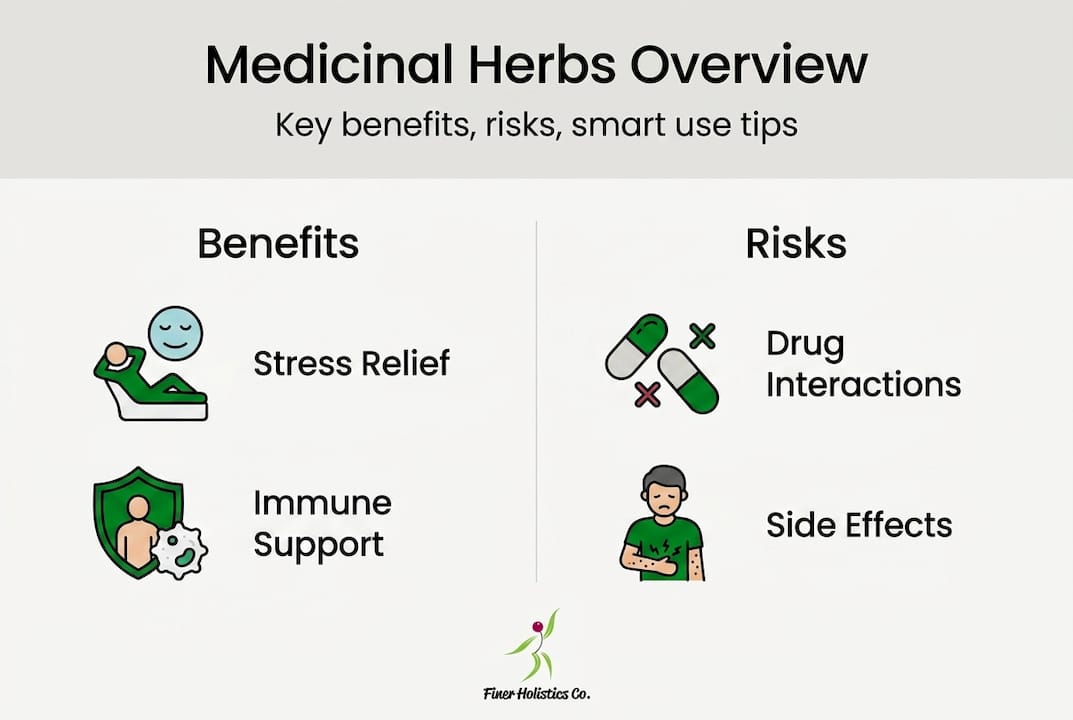
Let's break that down into plain language. Flavonoids are pigments found in colorful plants like berries and citrus. They help neutralize free radicals, which are unstable molecules that can damage cells over time. Alkaloids are nitrogen-containing compounds. Some of the most potent medicinal and toxic substances in nature fall into this category. Terpenoids give herbs like lavender and peppermint their distinctive smells, and many also have antimicrobial or anti-inflammatory properties. Phenolics are widespread compounds with antioxidant and immune-supporting effects.
| Compound class | Found in | Primary effect |
|---|---|---|
| Flavonoids | Berries, citrus, chamomile | Antioxidant, anti-inflammatory |
| Alkaloids | Echinacea, goldenseal | Antimicrobial, immune modulation |
| Terpenoids | Lavender, ginger, peppermint | Anti-inflammatory, antimicrobial |
| Phenolics | Turmeric, rosemary, green tea | Antioxidant, cellular protection |
Now, here's where it gets important. Lab results don't always translate directly into human health outcomes. A compound might show powerful antioxidant effects in a test tube but behave completely differently once it's digested, metabolized, and distributed through your body. That's why herbal bioactive effects studied in vitro require clinical trials to validate real-world benefits. Understanding the gap between promising lab data and confirmed human results is key to making smart choices. You can learn more about specific herbal ingredient mechanisms and what the current evidence actually supports.
Pro Tip: When you see an herbal supplement make bold claims, check whether those claims are backed by human clinical trials. Cell studies and animal research are starting points, not finish lines.
Now that you know how herbs interact with your body, let's look at which ones are backed by solid research and real-world uses.
Evidence-based benefits and uses of medicinal herbs
Not all herbs are created equal, and the evidence behind them varies significantly. Some have been tested in rigorous clinical trials. Others are supported mostly by tradition or preliminary data. Knowing the difference is what separates smart herbal wellness from wishful thinking.
Here are some of the best-studied herbs and their uses:
- Echinacea: Widely used for immune support, with some trials showing modest reductions in the duration of colds
- Garlic: Studied for cardiovascular health, with evidence supporting modest blood pressure and cholesterol effects
- Cranberry: One of the more robust datasets shows cranberry reduces UTI risk by 25% in women who experience recurring infections
- Black cohosh: Used for menopausal symptoms with mixed but notable clinical support
- Ginseng: Often used for energy and cognitive support, though study quality varies
- Ivy extract: Shown to be effective for bronchitis cough, and in some trials outperformed combination formulas
- Comfrey: When used topically, comfrey has demonstrated real pain-relieving effects
The clinical data behind some of these herbs is genuinely impressive. Frontiers in Pain Research reports that astragalus extract produced a 30% reduction in knee pain, with statistical significance at p<0.0001. Topical comfrey outperformed placebo for both back pain and osteoarthritis. These aren't small findings.
That said, how a clinical trial is designed matters enormously. Dose, form, duration, and the specific extract used all affect outcomes. This is why a standardized single extract sometimes works better than a combination blend. When multiple herbs are combined, it becomes harder to isolate which compound is doing the work and at what level.
Pro Tip: If you're researching a specific herb, look for studies that use a standardized extract with a defined concentration. "Herb X 500mg" tells you very little. "Herb X extract standardized to 8% compound Y" tells you much more.
For a deeper understanding of applying this knowledge safely, our herbal wellness best practices guide walks you through smart, evidence-informed use. You can also browse herbal evidence and smart uses for practical breakdowns of specific herbs.
While some herbs have impressive evidence, others do not, and there are important limitations and safety concerns you should know.
Risks, limits, and safe practices for medicinal herbs
Here's the part most herbal wellness content skips over. Herbs carry real risks, and ignoring them doesn't make you more holistic. It just makes you less informed.
Drug interactions are a serious concern. St. John's wort lowers drug levels for many medications, including antidepressants, birth control, and HIV treatments. Ginseng can interfere with blood pressure medications. These interactions aren't theoretical. They happen.
"Natural does not mean safe. Many potent drugs come from plants, and many herbal compounds interact with the same liver enzymes that process prescription medications."
Side effects are also real. Sage contains thujone, a compound that can cause seizures in large doses. Comfrey contains pyrrolizidine alkaloids (PAs), which are toxic to the liver when consumed internally. That's why comfrey is used topically and not as a tea or capsule. Not every herb works as claimed either. Cinnamon for diabetes and weight loss, for example, has unclear evidence, while sage for memory has only preliminary support.
Regulation gaps make things more complicated. The FDA does not require herbal supplements to prove safety or effectiveness before they hit store shelves. Product variability and contamination are documented problems.
Here is how to use medicinal herbs more safely:
- Tell every healthcare provider what herbs you're taking, including your pharmacist
- Research the specific herb and form using reliable sources like NCCIH or PubMed
- Start with a low dose and monitor your body's response
- Avoid internal use of herbs known for hepatotoxic compounds, like comfrey
- Be especially cautious during pregnancy, breastfeeding, or when taking multiple medications
- Choose products that have been third-party tested for purity and potency
For a fuller guide on navigating this safely, our herbal safety practices resource covers both traditional and modern risk awareness. We've covered the advantages and risks. Now, how do you actually integrate medicinal herbs wisely into holistic wellness?
Medicinal herbs: An evidence-guided approach for holistic wellness
At Finer Holistics, we've worked with enough people to know that the biggest mistake in herbal wellness isn't choosing the wrong herb. It's treating "natural" as a category that automatically means safe or effective. The evidence is clear that some herbs have proven clinical benefits, while others remain unverified. That reality doesn't diminish the power of plants. It actually deepens it.
The most powerful shift you can make is moving from "I'll try this herb I heard about" to "I understand what this herb does, what the evidence shows, and how it fits my specific situation." That's where herbs stop being a gamble and start being a genuine tool. And it's where holistic wellness earns the word holistic by pairing herbal knowledge with smart healthcare habits, not replacing one with the other. We explore this approach more in our herbal best practice perspective. Our philosophy on integration shapes every product we create.
Explore herbal wellness safely with Finer Holistics
If you're ready to take what you've learned here and apply it with confidence, Finer Holistics is built exactly for that. Every product we offer is rooted in herbal knowledge, traditional wisdom, and a genuine commitment to quality.
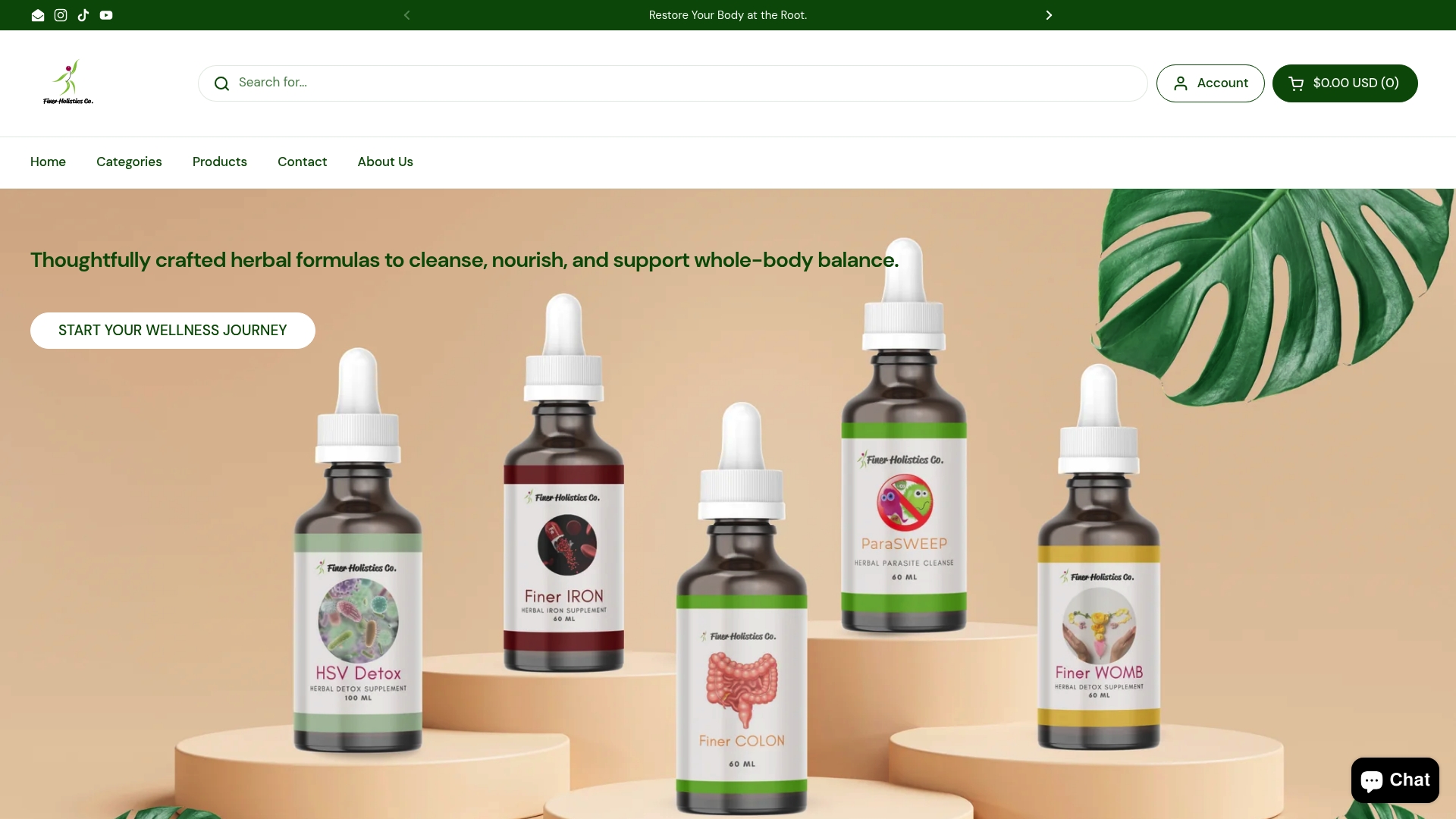
Browse our full herbal remedies shop to find teas, tinctures, and wellness blends chosen for real results, not just trends. If hormonal balance or women's health is your focus, our women's wellness herbs collection includes carefully selected botanicals with known traditional and evidence-supported applications. We make it easier to choose wisely, so your herbal wellness journey is both safe and meaningful.
Frequently asked questions
Are medicinal herbs scientifically proven to work?
Some herbs, like cranberry for UTIs and comfrey for back pain, are backed by clinical trial data, while others show mixed or unclear results depending on the herb, form, and dose.
What are the main risks of using medicinal herbs?
Key risks include drug interactions, side effects, product variability, and limited FDA oversight; many herbs are also not proven safe during pregnancy or breastfeeding.
Can medicinal herbs be used as a replacement for conventional medicine?
Herbs work best as a complement to conventional care, not a replacement; evidence-based integration is safer and more effective than swapping one for the other.
How can I choose safe and effective medicinal herbs?
Look for herbs with documented clinical evidence, choose third-party tested products, and check for potential interactions before you start any new herbal routine.