

TL;DR:
- Most natural self-care routines lack structure, leading to inconsistent results and frustration.
- Creating a personalized workflow with evidence-backed practices and quality herbs enhances sustainability and effectiveness.
You've read the listicles, tried the trending superfoods, and maybe even bought the diffuser that's been sitting on your shelf. Yet something still feels scattered, reactive, and hard to stick with. The problem usually isn't a lack of motivation or the wrong herbs. It's that most natural self-care advice gives you a collection of disconnected practices rather than a clear, repeatable workflow that fits your real life. This guide changes that by walking you through a stepwise, evidence-supported approach to building a personalized holistic routine grounded in herbal remedies, mindful movement, and smart daily habits.
Table of Contents
- Assess your needs and set holistic intentions
- Gather essential natural tools and ingredients
- Build your daily natural self-care workflow
- Avoiding common pitfalls and troubleshooting your workflow
- Tracking progress and refining your self-care system
- Most natural self-care routines fail without workflow—here's why
- Elevate your natural self-care with Finer Holistics
- Frequently asked questions
Key Takeaways
| Point | Details |
|---|---|
| Start with intentions | Set clear personal wellness goals before building your self-care routine. |
| Gather the right tools | Choose science-backed herbs and holistic tools fitted to your needs. |
| Follow a daily workflow | Integrate breathwork, herbal remedies, movement, and mindfulness into your day. |
| Avoid common mistakes | Stay consistent, source safe ingredients, and personalize your approach for best results. |
| Track and refine | Regularly monitor how you feel and adjust your routine for ongoing improvements. |
Assess your needs and set holistic intentions
The first step toward any meaningful natural self-care routine is a personalized assessment. Before you brew a single cup of herbal tea or roll out a yoga mat, you need to know what you're working toward and why.
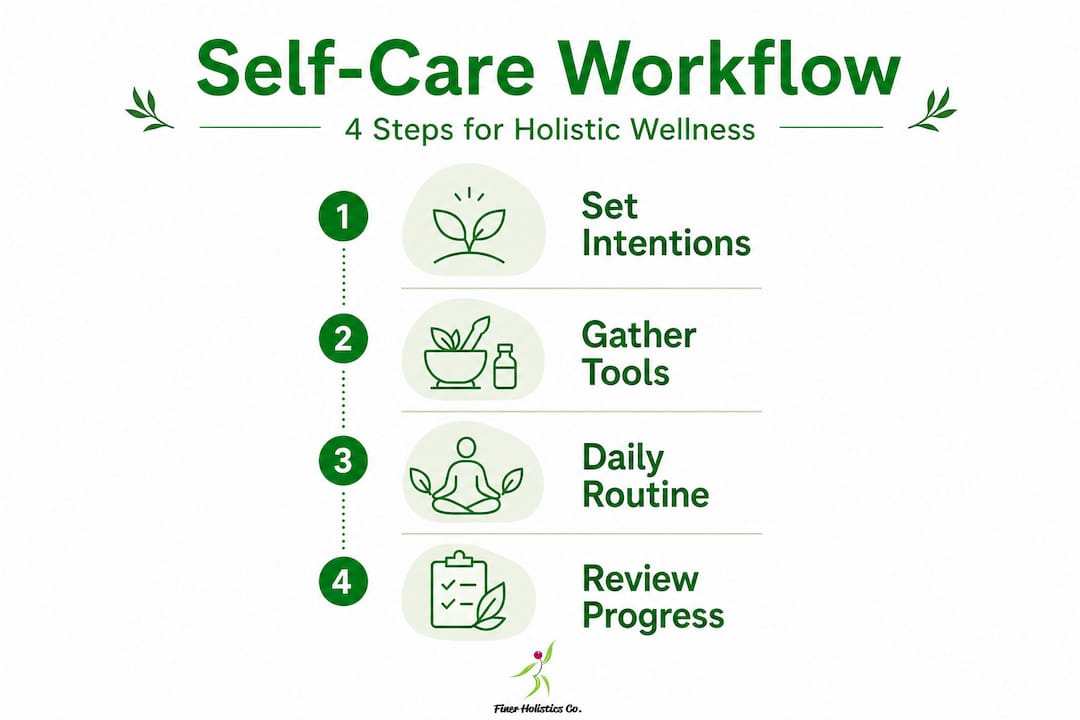
Start by naming your core wellness goals. Are you managing chronic stress and tension? Struggling with low energy in the afternoon? Dealing with hormonal shifts, sluggish digestion, or skin that reacts to harsh synthetic products? Your answers directly shape which herbs, practices, and rhythms will serve you best. A wellness checklist can help you map these areas systematically so nothing important gets overlooked.
Next, honestly assess your current obstacles. Common ones include:
- Fatigue that makes morning routines feel impossible
- Anxiety or mental fog that steals focus throughout the day
- Harsh or synthetic products that irritate skin or the gut
- Time scarcity that makes elaborate rituals feel unrealistic
- Inconsistency rooted in routines that don't match your lifestyle
Once you see your obstacles clearly, setting intentions becomes far more purposeful. Intentions aren't vague wishes. They're directional anchors. For example, evidence shows that yoga reduces cortisol more effectively than many other evidence-based stress-reduction strategies, making it a powerful intention to set if stress is your primary concern. That single data point can guide your entire evening workflow. The whole-person wellness guide goes deeper on connecting mental, physical, and emotional dimensions into one integrated approach.
Pro Tip: Write your top three wellness intentions on a sticky note and place it somewhere visible, like a bathroom mirror or kitchen cabinet. Seeing them daily builds momentum and keeps your workflow purposeful rather than performative.
Gather essential natural tools and ingredients
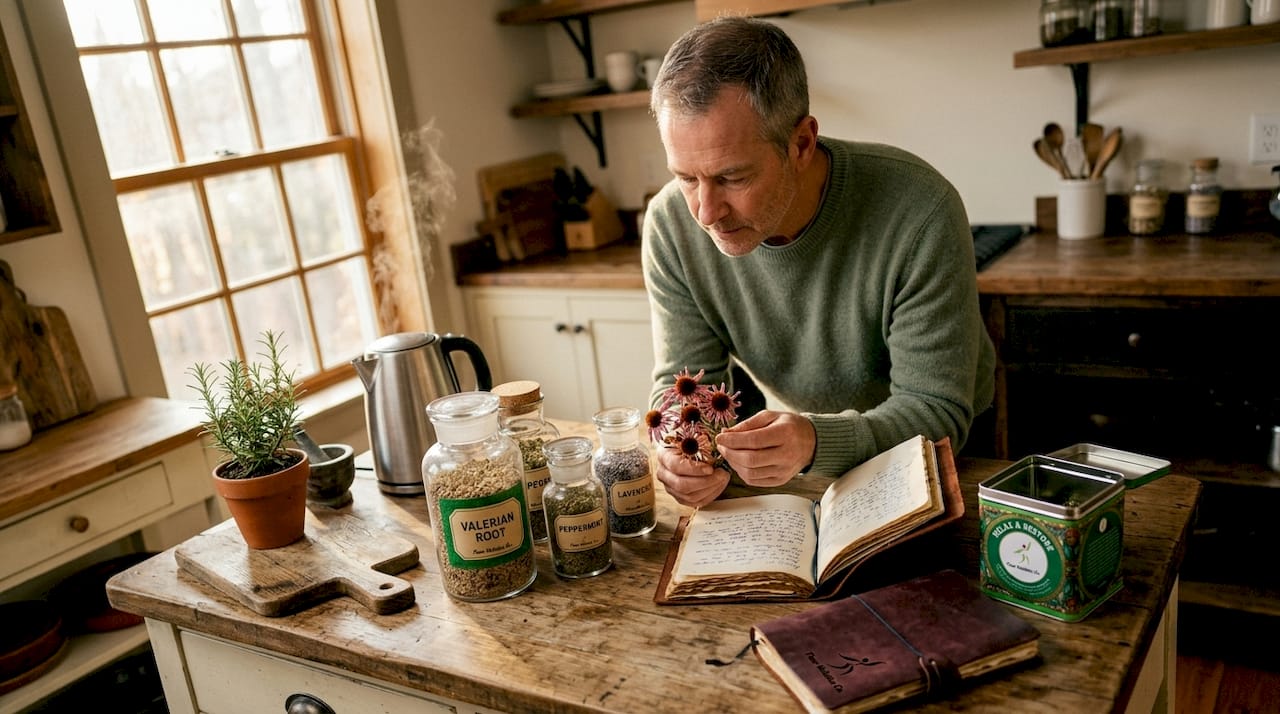
Once you've set your intentions, you'll want the right herbal and holistic tools at the ready. Showing up to your self-care routine without the right materials is like trying to cook a meal with an empty pantry.
Key herbal ingredients to stock:
- Ashwagandha (Withania somnifera): Widely studied for stress adaptation and energy. Clinical research confirms that Ashwagandha tops quality-of-life improvements and symptom reduction among commonly used adaptogens.
- Ginger root: Supports digestion, reduces nausea, and has potent anti-inflammatory properties.
- Turmeric: Contains curcumin, a compound linked to reduced inflammation and improved mood.
- Lemon balm: A gentle nervine (calming herb) particularly effective for anxiety and sleep support.
Supportive tools to gather:
- A yoga mat for grounding movement practices
- A simple journal for reflection and symptom tracking
- A small herbal teapot or French press dedicated to botanical brews
- An aromatherapy diffuser for calming scents like lavender or eucalyptus
Part of building a sustainable herbal wellness routine is choosing the right form for each herb. The table below breaks down the most common options:
| Herbal form | Best used for | Preparation time | Bioavailability |
|---|---|---|---|
| Herbal tea (infusion) | Mild daily support, relaxation | 5 to 10 minutes | Moderate |
| Decoction (long simmered) | Roots, bark, dense herbs, stronger therapeutic action | 20 to 45 minutes | Higher |
| Tincture (alcohol extract) | Targeted, fast-absorbing support | Ready to use | High |
| Capsule/powder | Convenience, travel, precise dosing | Ready to use | Variable |
Sourcing quality herbs matters as much as choosing the right ones. Look for certified organic sources, reputable herbal suppliers with clear batch testing, and formulations free from fillers or synthetic additives. Exploring science-backed wellness resources helps you understand which ingredient forms are most supported by current research.
Build your daily natural self-care workflow
With your essentials in hand, it's time to put them into action with a clear, stepwise routine. A structured workflow beats a loose list of good intentions every single time.
Step-by-step daily workflow:
- Morning: Hydrate and activate. Start with 12 to 16 ounces of warm water, optionally with fresh lemon and a pinch of ginger. Follow with an herbal elixir, such as an ashwagandha tonic or turmeric golden milk, to wake up your digestive system and set an adaptogenic foundation for the day.
- Midday: Breathe and reset. Take a deliberate five-minute mindful breathing break. Research confirms that 5-minute breathing sessions practiced three to five times daily measurably lower cortisol and reduce anxiety. Pair this with a cup of herbal tea (lemon balm or chamomile works beautifully here) to anchor the mental reset.
- Late afternoon: Move and ground. A short walk outdoors or a gentle yoga flow for 15 to 20 minutes resets energy levels and prepares the nervous system for a calm evening.
- Evening: Reflect and restore. Wind down with a warming herbal decoction. Evidence shows that an herbal decoction outperforms standard teas for pain reduction and overall satisfaction, particularly for those dealing with menstrual discomfort. Follow this with five to ten minutes of reflective journaling before bed.
The table below summarizes the science behind each daily practice:
| Practice | Timing | Key benefit | Evidence |
|---|---|---|---|
| Adaptogenic herbal elixir | Morning | Stress buffer, energy balance | Ashwagandha QoL research |
| Mindful breathing (5 min) | Midday | Cortisol and anxiety reduction | 3 to 5x daily protocol |
| Outdoor walk or yoga | Afternoon | Mood uplift, tension release | Forest bathing cortisol data |
| Herbal decoction | Evening | Pain relief, deeper relaxation | Dysmenorrhea clinical trial |
| Reflective journaling | Evening | Emotional regulation, goal tracking | Habit science |
Explore the 4-step detox workflow and the step-by-step detox guide to layer in a periodic cleansing protocol that complements this daily structure.
Pro Tip: If you're a night owl, shift your morning elixir to whenever you first eat. The sequence matters more than the clock time. Rigidity is one of the fastest ways to abandon a routine.
Avoiding common pitfalls and troubleshooting your workflow
Even the best routines can encounter obstacles. Knowing what typically goes wrong lets you fix it before it derails your whole practice.
Common mistakes that undermine natural self-care workflows:
- Skipping the morning anchor step and trying to compensate later in the day
- Introducing five new herbs or habits at once, which makes it impossible to know what's working
- Sourcing low-quality herbs from bulk bins with no origin transparency or testing
- Treating the routine as all-or-nothing, where one missed day feels like total failure
- Ignoring body feedback, such as digestive changes, skin reactions, or sleep shifts
When troubleshooting, start simple. Keep a short daily log noting your energy, mood, digestion, and sleep quality. If something feels off after one to two weeks, adjust one variable at a time. Change the herb form before swapping the herb entirely. Shift timing before eliminating a step. This methodical approach protects you from chasing solutions that aren't actually needed.
"Nature doesn't rush, and neither should your wellness routine. Sustainable change is built slowly, one consistent habit at a time."
One underutilized troubleshooting tool? Time in nature. Research shows that forest walking lowers salivary cortisol by approximately 1.33 nmol/L, a measurable physiological shift that can help you reset when a routine feels stressful rather than restorative. Even a 20-minute walk through a park delivers real neurological benefit.
Critical safety notes: Always check for herb-drug interactions before starting a new botanical, especially if you take prescriptions. Herbs like ashwagandha and lemon balm can interact with sedatives or thyroid medications. Use evidence-based holistic practices as your foundation, and consult a qualified herbalist or integrative health practitioner when you're unsure. The smart herbal remedy use guide is a strong resource for navigating safe, informed choices.
Pro Tip: Set a "routine review" reminder every two weeks on your phone. Use it to ask yourself three questions: What's working well? What feels like a chore? What result am I still waiting to see?
Tracking progress and refining your self-care system
Once your workflow is up and running, tracking and adjustment will help make it uniquely yours. A routine without observation is a shot in the dark.
Here's a simple progression for building an effective tracking habit:
- Start a daily wellness log. It doesn't need to be elaborate. A simple five-line entry rating your energy (1 to 10), mood (1 to 10), sleep quality, digestive comfort, and any notable symptoms takes about three minutes.
- Review weekly. At the end of each week, read back through your entries and look for patterns. Did energy dip on days you skipped the morning elixir? Did sleep improve after three consecutive days of evening decoctions?
- Adjust one element at a time. If you notice a pattern, make one targeted change, such as adding an adaptogen, adjusting the herb dose, or shifting your yoga session to a different time.
- Celebrate measurable progress. Marking improvements, even small ones like two fewer afternoon energy crashes per week, reinforces the habit loop and keeps motivation alive.
- Reset goals every 30 to 60 days. Wellness needs evolve. What served you during a high-stress work sprint may need to shift during a more balanced season.
Evidence confirms that practices like yoga and forest walking measurably reduce cortisol and naturally support the kind of reflective awareness that makes tracking feel valuable rather than clinical. Tracking is the bridge between "trying things" and actually building a system. Browse expert herbal healing tips for additional guidance on refining your herbal combinations over time.
Most natural self-care routines fail without workflow—here's why
Here's the uncomfortable truth most wellness content avoids: the majority of natural self-care advice is just a dressed-up list. Take ashwagandha. Drink lemon balm tea. Try yoga. All good recommendations on their own, but scattered suggestions rarely produce lasting results. They produce a cluttered cabinet and a sense of guilt when you forget to do them.
What's missing isn't more practices. It's structure. A workflow gives your practices an order, a context, and a logical relationship to each other. Morning herbs prime the body's stress-response system. Midday breathing prevents the cortisol spike that afternoon fatigue rides in on. Evening rituals signal the nervous system to downshift. Each step prepares the ground for the next. That's not just habit science—it's how the body actually works.
The deeper issue is that wellness culture celebrates accumulation. More adaptogens, more rituals, more supplements. But real-world results come from personalization and sequencing, not from collecting every trending herb. A person who takes ashwagandha consistently for 60 days, tracks their response, and adjusts their dose intelligently will outperform someone who cycles through six adaptogens with no structure.
The workflow mindset for natural remedies reframes self-care from a collection of isolated acts into a compounding system. Compounding is the keyword. When each practice builds on the last, the cumulative effect over weeks and months becomes genuinely transformative—not because of any single herb or ritual, but because the system is working together. That's the shift we advocate for at Finer Holistics, and it's the reason workflow thinking belongs at the center of every natural health conversation.
Elevate your natural self-care with Finer Holistics
Building a structured, herbal-powered self-care workflow is an investment in yourself that pays off compoundingly. But assembling the right herbs, knowing which forms to use, and sourcing quality ingredients can feel like a project of its own.
That's where Finer Holistics comes in. Our handcrafted herbal teas, tinctures, and natural detox blends are designed to slot directly into the kind of stepwise workflow this guide outlines. Whether you're starting from scratch or upgrading an existing routine, our detox starter pack gives you a turnkey foundation, and our full herbal detox collection lets you customize every step. Explore the complete range at Finer Holistics and find the herbal support that fits your unique wellness goals.
Frequently asked questions
What is a natural self-care workflow?
A natural self-care workflow is a stepwise routine that integrates herbal remedies and holistic practices in a structured daily sequence designed to support overall well-being. Unlike a loose list of habits, it connects each practice intentionally so they reinforce one another.
Which herb is most effective for overall wellness?
Ashwagandha stands out as the most well-supported option, with clinical research confirming that Ashwagandha improves quality of life and reduces symptoms more consistently than most other studied adaptogens.
How does yoga support natural self-care?
Yoga is one of the most researched stress-reduction tools available, and evidence shows that yoga reduces cortisol more effectively than most other studied evidence-based practices, making it a powerful anchor for any holistic routine.
What's better: herbal teas or decoctions?
It depends on your goal, but research shows that a herbal decoction outperforms standard teas for pain relief and user satisfaction, particularly for individuals managing menstrual discomfort or conditions requiring stronger botanical extraction.